|
|
Tuesday, March 16th, 2021 at 7 PM
ATTENTION - This is a Zoom presentation!
You must pre-register to attend.
To register, please contact Meghann at 313.993.1259 or meghann@brewingchemistry.com
Beyond DDT: Pesticides, Pollinators, and Population Declines
Presented by:
Erin Parker, Field Conservation Officer and Nature Centers Manager, Detroit Zoological Society
Peregrine falcons, once extirpated from states East of the Mississippi River, now routinely rear young in downtown Detroit. Bald Eagles, Ospreys, and many other birds of prey species have seen dramatic population increases since the banning of the insecticide DDT (dichloro-diphenyl-trichloroethane) across Europe and the United States in the early 1970s.
But many other groups of birds are currently seeing steep populations declines- is there a link to pesticide use? What can homeowners, community members, and lawn maintainers do to conserve birds, bats, and the ‘bugs’ that feed them all? How do biomagnification and bioaccumulation work (and, um, what do those terms mean, anyway?) We’ll look at the research on chemicals in the environment and discuss how to support healthy backyard ecosystems so that we can all thrive together.
About:
Erin Parker is a former high school science teacher who maintains teaching licenses in Michigan and Wisconsin. She currently supports conservation and education for the Detroit Zoological Society at the Zoo and at the Belle Isle Nature Center. She is easily distracted by birds.
|
Past Events
|
ATTENTION - This is a Zoom presentation!
Michigan’s Forever Chemical
Presented by:
Rachel Clark, Michigan History Center
In 1973, polybrominated biphenyl or PBB was ingested by Michigan farm animals, contaminating meat, dairy, and other farm products which were eaten by nearly all Michiganders, resulting in one of the largest episodes of American food contamination. Historian Rachel Clark is developing a high school education program using diverse PBB historical collections. Her program highlights industrial chemicals, contamination, and clean-up over the last 50 years. There are on-going health studies around the long-term effects currently being conducted by Emory University.
Rachel is the Education Specialist for all K-12 education content at the Michigan History Center. She has a History M.A., English and Communications B.A.s, all from Michigan State University, and holds a Michigan teaching certificate..
Tuesday, February 16th, 2021 at 7 PM
ATTENTION - This is a Zoom presentation!
You must pre-register by Monday, November 9th to attend. to attend.
To register, please contact Meghann at 313.993.1259 or meghann@brewingchemistry.com.
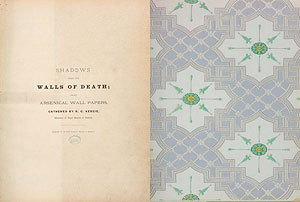
Shadows From the Walls of Death:
Dr. Kedzie’s Wallpaper Book
 Presented by: Presented by:
Rachel Clark, Michigan History Center
Back in Victorian times, many hidden killers existed in our homes—even in our wallpaper. Learn the thrilling and morbid story of arsenic’s luminous green appeal through the lens of Michigan’s Dr. Kedzie, a professor who published a book of wallpaper samples that included dangerous arsenic dyes.
Tuesday, December 15th, 2020 at 7 PM
STEM Inclusion:
Frankenstein, Black Panther and Vibranium
 Presented by: Presented by:
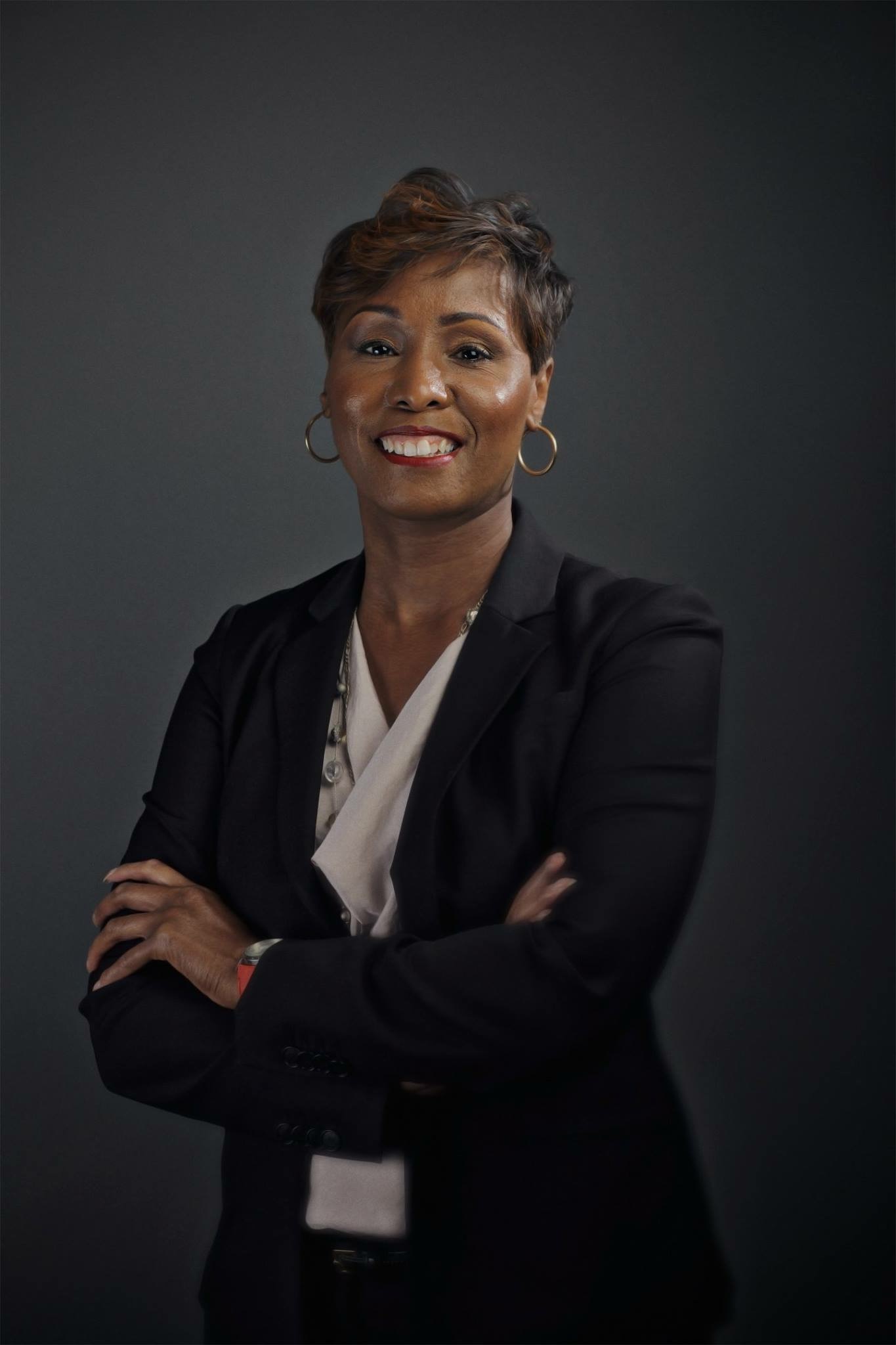
Sibrina N. Collins, Ph.D.,
The Marburger STEM Center, Lawrence Technological University, Southfield, MI
It is critically important to use student experiences and make key connections to classroom content. Pop culture provides a unique platform to engage students in the STEM (Science, Technology, Engineering and Mathematics) fields. In this discussion, we will focus on using popular movies such as Black Panther and Mary Shelley’s novel Frankenstein for classroom engagement in STEM and the Humanities disciplines. In addition, we will also discuss the ongoing public engagement efforts and programming for LTU’s Marburger STEM Center.
Talk begins at 7 PM EST
|
The Story of Warfarin:
A Midwestern Drug Discovery Tale
Presented by:
Shannon Timmons, Ph.D.
Chair, Detroit Local Section of the American Chemical Society
Associate Professor of Chemical Biology, Lawrence Technological University, Southfield, MI
Natural products, molecules produced by living organisms, have long played a pivotal role in drug development. Approximately half of all new pharmaceuticals approved by the FDA are natural products or natural product analogs. Warfarin is a natural product analog that is clinically used as an anticoagulant drug. It was discovered at the University of Wisconsin-Madison by Dr. Karl Paul Link and coworkers in the 1940s. The fascinating human story behind the discovery of this medicinally relevant organic molecule will be the focus of this presentation.
|
Tuesday, February 18th, 2020 at 7 PM
Science, Technology, & Race
Presented by:
E. Prasad Venugopal, Ph.D.,
Associate Professor of Physics, University of Detroit Mercy
Venugopal examines the ways in which science and technology constantly recreate and reconstruct the concept of race, and how race and racial categories color research and practice in science and technology. Venugopal’s lecture will include examples detailing the links between science and race in history, from pre-Darwinian racial thought to the Human Genome Project.
Find out what these images have to do with race!
 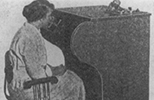 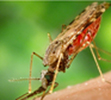 
Dutch treat dinner at 6 PM
Talk begins at 7 PM
|
Tuesday, January 21st, 2020 at 7 PM
Medieval Illustration:
The Science of Making Books in the Middle Ages
Presented by:
Randy Asplund
Medieval Book Artist, Randy Asplund will give a presentation of manuscript illumination, calligraphy and book arts. He grinds his own pigment, and also creates his own vellum. Randy will make your medieval art just as it was done in the Middle Ages, using the same authentic materials and techniques. Unlike other illuminators who use modern equivalents and copy existing art, Randy works as if he were actually an artist in the middle ages. He even makes many of his colors because they are so difficult to find today. His artwork can be created on genuine animal skin parchment, with ink made from wasp nests, genuine gold and silver leaf, and pigments made from such exotic materials as lapis lazuli, azurite, malachite, vermilion, minium, saffron, buckthorn berries, and brazil wood. He will bind books with wood boards and leather, with hand-made clasps and other hardware, in your choice of styles as were done in Europe before 1500 AD.
Dutch treat dinner at 6 PM
Talk begins at 7 PM
|
Tuesday, November 19th, 2019 at 7 PM
The Detroit Bomb Squad
Presented by:
Lt. Matthew Taylor, Officer-in-Charge,
Detroit Police Bomb Squad
The Detroit Police Department Bomb Squad responds not only to bomb threats, but also unattended or suspicious items, suspected military ordnance, and post-blast scenes. The Bomb Squad follows the Federal Bureau of Investigation protocols when faced with these situations. Lt. Taylor has years of experience from also working with the Office of Homeland Security and the Tactical Mobile Unit. He will share stories of some unique cases and explain how science is used in order for his team to respond safely. He will also provide information for those who are interested in pursuing a career as a bomb technician, forensic scientist or an energetic materials chemist.
Join us to learn more about the Bomb Squad
and help Brewing Chemistry celebrate its 11th Anniversary!!
Dutch treat dinner at 6 PM
Talk begins at 7 PM
|
Tuesday, October 15th, 2019 at 7 PM
Weapons of Cancer Destruction:
Targeting Cancer Cells with a
Molecular Bomb
Presented by:
Mara Livezey, Ph.D., Assistant Professor,
University of Detroit Mercy
One in eight women will develop breast cancer in her lifetime. These cancers are initially responsive to traditional therapies, but many reoccur as resistant to these same drugs years later. Come learn about how a pre-clinical drug targets and kills drug-resistant breast cancers in a new way!
Dutch treat dinner at 6 PM
Talk begins at 7 PM
|
Tuesday, September 17th, 2019 at 7 PM
The Proposed U.S. Ecology Expansion
Annual Chemistry Show and Tell
Presented by:
Nick Leonard, Executive Director
Great Lakes Environmental Law Center
U.S. Ecology owns and operates a hazardous waste facility in Detroit. The company accepts hazardous wastes from industrial processes. The treatment process creates three main byproducts: wastewater, nonhazardous solid waste, and hazardous solid waste. Hazardous and non-hazardous solid wastes are disposed off-site. Wastewater is discharged into the Detroit sewer system in accordance with a permit issued to the company by the Great Lakes Water Authority. U.S. Ecology is seeking a license from the Michigan Department of Environmental Quality that will allow it to increase the amount of hazardous waste that it stores and treats at its facility. Nick Leonard, an attorney for the Great Lakes Environmental Law Center, will explain the impact this expansion could have on the community and environment.
Dutch treat dinner at 6 PM
Talk begins at 7 PM
|
Tuesday, June 18th, 2019 at 7 PM
What is it?
Annual Chemistry Show and Tell
A grown-up version of the exercise usually associated with schoolchildren will be enjoyed with a chemistry twist. Bring your most unique piece of lab glassware or something from your element collection. Tell how you discovered your treasure and discuss possible uses for your prized objects. What do you know about them, the object & the chemists who used them? Share your personal history through these objects. Can you imagine what we will see & share? So go search your laboratories, attics, basement, storage units, boxes & bags and bring that chemistry item that means something to you.
Dutch treat dinner at 6 PM
Talk begins at 7 PM
|
Tuesday, July 16th, 2019 at 7 PM
The Truth Behind Clean Labels
Presented by:
Dave McCall, Ph.D.,
Chemist, Ipax Atlantic
Clean label is not a scientific term. Rather, it is a consumer term that has been broadly accepted by the food industry, consumers, academics, and even regulatory agencies. There is no official definition of “clean labels”, but the term is generally interpreted to mean food formulations with shorter ingredient lists without artificial (synthetic) chemicals, and with familiar ingredients. Consumers want clean labels, and major food manufacturers, restaurants, and supermarkets are scrambling to provide them. But exactly what are they, and are they good for consumers and their health? Do they have downsides? Do clean labels result in meaningful changes, or are they just another marketing fad?
Dutch treat dinner at 6 PM
Talk begins at 7 PM
|
Tuesday, August 20th, 2019 at 7 PM
The Chemistry Moth
The Moth is a non-profit group based in New York City dedicated to the art and craft of storytelling. Founded in 1997, the organization presents a wide range of theme-based storytelling events across the United States and abroad, often featuring prominent literary and cultural personalities. Brewing Chemistry will host its first Chemistry Moth in which attendees are invited to tell a story. The guidelines for the evening will be that you must tell a true, chemistry-themed story within seven minutes (without notes).
Please bring your personal story to share.
|
Tuesday, May 21st, 2019 at 7 PM
Risk Assessment in the Teaching Laboratory
Presented by:
Monique Wilhelm,
Laboratory Manager and Chemical Hygiene Officer, University of Michigan-Flint
The American Chemical Society recommends that a risk assessment be completed prior to performing work in the lab. Many chemical educators worry about teaching this concept to their students when they never learned how to do it themselves. An easy to implement approach to adding risk assessment throughout the curriculum will be discussed and aids will be shared.
This talk will apply to both college and high school level laboratories.
Dutch treat dinner at 6 PM
Talk begins at 7 PM
|
Tuesday, June 18th, 2019 at 7 PM
What is it?
Annual Chemistry Show and Tell
A grown-up version of the exercise usually associated with schoolchildren will be enjoyed with a chemistry twist. Bring your most unique piece of lab glassware or something from your element collection. Tell how you discovered your treasure and discuss possible uses for your prized objects. What do you know about them, the
object & the chemists who used them? Share your personal history through these objects. Can you imagine what we will see & share? So go search your laboratories, attics, basement, storage units, boxes & bags and bring that chemistry item that means something to you.
|
Tuesday, April 16th, 2019 at 7 PM
The Chemistry of Expiration Dates
Presented by:
Carmen Folk, QC Lab Chemist, Ferndale Laboratories, Inc.
Stability chemists are responsible for assigning an expiration date to a given product. Many factors need to be considered, including chemical and physical properties of the active ingredients, manufacturing procedures, formulations, containers and closures, storage conditions, and the stability of the article to maintain its quality or purity through the use of antioxidants or preservative. Detecting and identifying potentially harmful degradants is also important. Carmen Folk works as a stability chemist at Ferndale Laboratories and is tasked with many of these duties. Stability chemists monitor the quality of a product from the date of manufacture until a determined length of time has elapsed: from days to months to years! Carmen maintains FDA accountability while generating multitudes of data on the physical (appearance, pH, viscosity) and chemical attributes (API stability, Impurities/Degradants) of cosmetic and pharmaceutical products. Simply put, a lot of work goes into assigning an expiration date.
Dutch treat dinner at 6 PM
Talk begins at 7 PM
|
Tuesday, March 19th, 2019 at 7 PM
Science Opportunities at Marygrove High School
Presented by:
Nir Saar, Principal, Marygrove Schools
Marygrove High School is part of a new, one-of-a-kind K-12 institution serving students in the city of Detroit. It is a special collaboration between Detroit Public School Community District and the University of Michigan, housed at the historic Marygrove College Campus. Their high school program is designed for students interested in pursuing careers in engineering, computer technology, or related science fields. It introduces students to the scope, rigor, and discipline of engineering through exposure to complex problems and authentic experiences. Marygrove High School is currently looking for high school science and engineering teachers. The new school at Marygrove College will bring together exemplary learning opportunities from prenatal to Pre-K, K-12, and post-secondary to graduate-level in a “cradle-to-career” continuum.
Dutch treat dinner at 6 PM
Talk begins at 7 PM
|
Tuesday, February 19th, 2019 at 7 PM
Advances in Raman Spectroscopy
Presented by:
Karen Esmonde-White, Ph.D., Senior Marcom Specialist,
Kaiser Optical Systems, Inc., Ann Arbor, MI
Karen Esmonde-White will describe technologies and concepts in Raman spectroscopy that are enabling new applications in industrial process control, biological molecule analysis, and clinical biomedical measurements. As a process analytical technology, Raman spectroscopy is a powerful tool that provides real-time in situ measurements that inform on the process chemistry. Kaiser Optical Systems, Inc. is a world leader in Raman Spectroscopy, spectrographic instrumentation and applied holographic technology. Principle products include Raman products, holographic components for spectroscopy, telecommunications, astronomy and ultra-fast sciences. Their holographic transmission gratings enable the entire Raman spectrum to be acquired simultaneously, instead of scanning in bits and pieces, allowing superior calibration stability and enabling true real-time analysis.
Dutch treat dinner at 6 PM
Talk begins at 7 PM
|
Tuesday, January 15th, 2019 at 7 PM
How the Government Shutdown Affects Science?
Chemistry Community Forum
The partial US government shutdown that took effect at midnight on 21 December 2018 because lawmakers and the White House remain in a standoff over President Trump’s demand for $5 billion in funding to build a wall along the southern border with Mexico, is disrupting the country’s scientific community. The impasse has all but halted work at numerous agencies that fund or conduct research, including NASA, the National Science Foundation (NSF), the U.S. Department of Agriculture (USDA), the National Oceanic and Atmospheric Administration (NOAA), Food and Drug Administration (FDA), Environmental Protection Agency (EPA), National Park Service and parts of the Smithsonian Institution.
Many of the scientists at those shuttered agencies have been furloughed without pay, barred from working at home, and prohibited from checking their government email. A travel ban has hurt attendance at several major conferences and caused organizers to cancel other events. Join us to share any impact the shutdown has had on your scientific position at this group discussion.
Dutch treat dinner at 6 PM
Talk begins at 7 PM
|
Tuesday, December 11th, 2018 at 6:30 PM
Neurogastronomy Holiday Field Trip
Tour of Sfumato Fragrances and Castalia Cocktails
Join Brewing Chemistry for a behind the scenes look at the science of scent and cocktails. The husband and wife team of Kevin Peterson and Jane Larson know the power of scent, and they use their expertise to create unique natural perfumes for their line of Sfumato Fragrances. The retail space stocks their signature line of natural fragrances, as well as essential oils, incense, books, cocktail bitters, and other items in the realm of scent. While a fragrance store by day, their shop transforms into a cocktail bar, Castalia, by night. Castalia serves alcoholic and NA cocktails based on Sfumato fragrances using liqueurs, spirits, and in-house tinctures. Each drink is accompanied by a scent, creating an elevated experience in an intimate sanctuary for the senses. Peterson, a former engineer with roots in both physics and the culinary world, will explain the neurogastronomy of these wonderful scent and cocktail pairings.
Please RSVP for this event by December 1st!!!
The talk begins at 6:30 P.M. and lasts for approximately one hour.
Cocktails can be purchased from the scent pairing menu after the talk.
Light refreshments will be provided.
Sfumato is located at 3980 2nd Ave, Detroit, MI 48201. (SE corner of Second Ave and Alexandrine St, down the outdoor stairs).
Contact Meghann at meghann@brewingchemistry.com to RSVP
|
Tuesday, November 20th, 2018 at 7 PM
FBI Opportunities for Chemists
Presented by: Mark E. Davidson,
Special Agent, Federal Bureau of Investigation, Detroit Division
Mark E. Davidson is a special agent at the Detroit office of the FBI. Agents at the Detroit branch possess a mix of talents and experience that enable the FBI to help protect you, your families, and your workplaces from a full range of national security threats and major crime problems. Mark E. Davidson will explain the role of the FBI with regards to weapons of mass destruction and one of the nation’s largest international border cities. The Detroit Division, one of the FBI’s larger field offices, has three counterterrorism squads that are broken down according to the organizations they cover and geographic areas of the world. Squad members utilize chemical, biological, and nuclear science to investigate terrorist threats against the United States.
Come learn about employment opportunities and the outreach programs that the Detroit Division of the FBI has to offer chemists!
Cake will also be provided to celebrate the 10th anniversary of Brewing Chemistry.
Dutch treat dinner at 6 PM
Talk begins at 7 PM
|
Tuesday, October 16th, 2018 at 7 PM
Environmental Management Association
Presented by: Larry Russette, President and Kevin O’Mara, Vice President,
Environmental Management Association
The Environmental Management Association (EMA) is a 501(c) 6 organization that promotes those in the industry that are making strides in environmental sustainability in their business practices whilst recognizing significant green accomplishments. Their purpose is to establish and maintain an active information exchange between government and industry professionals involved with environmental management to achieve green solutions to environmental issues. They believe in and support the application of integrity, common sense, sound science, and fiscal responsibility in all matters affecting the environment.
An overview of the history and future of EMA will be presented. The talk will also focus on who EMA is and the projects they are currently involved with. The importance of mentoring "emerging scientists" and their interactions with local environmental leaders.
Dutch treat dinner at 6 PM
Talk begins at 7 PM
|
Tuesday, September 18, 2018 at 7 PM
PFAS in the Environment
Presented by: Matt Schroeder, Senior Environmental Engineer
and
Jeff Bolin, Vice President of Technical Operations, The Dragun Corporation, Farmington Hills, MI
PFAS (per- and polyfluoroalkyl substances) encompass a group of more than 3,000 manmade
chemicals with a fluorinated carbon base. Two particular PFAS compounds, perfluorooctanoic acid
(PFOA) and perflurooctane sulfonate (PFOS), have recently become the focus of many communities
due to its presence in groundwater and in drinking water supplies. PFAS have been in the news
around Michigan in Oscoda, Lapeer, and Rockford, to name a few.
Many common commercial products used this fluorinated chemistry due to their properties of
repelling both water and oil. ScotchGuard and Teflon are both PFAS-based products. Additionally,
PFAS have been used in firefighting foams and electroplating and is being detected in groundwater at
active and old landfills.
Matt Schroeder and Jeff Bolin of The Dragun Corporation will talk about what they are seeing in the
current regulatory, political, and litigation arenas in Michigan around PFAS. They will discuss some
of the more prominent challenges with dealing with PFAS in the environment.
Dutch treat dinner at 6 PM
Talk begins at 7 PM
|
Tuesday, August 21st, 2018 at 7 PM
The Chemistry Moth
The Moth is a non-profit group based in New York City dedicated to the art and craft of storytelling. Founded in 1997, the organization presents a wide range of theme-based storytelling events across the United States and abroad, often featuring prominent literary and cultural personalities. Brewing Chemistry will host its first Chemistry Moth in which attendees are invited to tell a story. The guidelines for the evening will be that you must tell a true, chemistry-themed story within seven minutes (without notes).
Please bring your personal story to share.
Dutch treat dinner at 6 PM
Talk begins at 7 PM
|
Tuesday, July 17, 2018 at 7 PM
The Chemistry of Soap Making
Presented by: Caleb Archambault
Chemist, PPI Aerospace
Caleb Archambault works full time in the coatings industry at PPI Aerospace, but has extensive experience in soap making. This informative talk will be geared towards beginner and expert soap makers alike. Soaps and detergents are essential to personal and public health. They safely remove germs, soils and other contaminants and help us to stay healthy and make our surroundings more pleasant. Soaps are made from fats and oils or their fatty acids. The saponification reaction that takes place to produce soap will be explained. Caleb will not only describe the soap making process, but will also explain how bath bombs are made.
Dutch treat dinner at 6 PM
Talk begins at 7 PM
|
Tuesday, June 19th, 2018 at 7 PM
What is it?
Annual Chemistry Show and Tell
A grown-up version of the exercise usually associated with schoolchildren will be enjoyed with a chemistry twist. Bring your most unique piece of lab glassware or something from your element collection. Tell how you discovered your treasure and discuss possible uses for your prized objects. What do you know about them, the object & the chemists who used them? Share your personal history through these objects. Can you imagine what we will see & share? So go search your laboratories, attics, basement, storage units, boxes & bags and bring that chemistry item that means something to you.
Dutch treat dinner at 6 PM
Talk begins at 7 PM
|
Tuesday, May 15th, 2018 at 7 PM
Improved Instrument Robustness via a Hot Surface Induced Desolvation (HSID) Interface for Tandem Mass Spectrometry Instrumentation: cannabis, pesticides and veterinary drug residue analysis
Presented by:
Frank A. Kero, Ph.D., PerkinElmer Environmental Health, Downers Grove, IL
The emergence of liquid chromatography tandem mass spectrometry (LC-MS/MS) as a gold standard analytical platform for quantitative method development in high throughput toxicology, environmental surveillance and food safety laboratories has been well documented. Recent trends in practical considerations for improvements towards laboratory implementation focus on reduced downtime to facilitate testing methods for large sample populations. This talk will report on related strategies with a special focus on a dual spray ionization apparatus equipped with a heated coaxial flow ion source. The result yields a path for ion introduction into the orifice of the mass spectrometer using multi-orthogonal channels and laminar flow sampling. The advantages for this platform include high sensitivity due to an inherent reduction in chemical background (i.e. S/N, reduced N). Instrument ruggedness and stability are also improved due to orthogonal sampling and laminar flow. The laminar flow phenomenon is achieved by a combination of the influences of gas flow dynamics and electric fields. Ions are orthogonally extracted at atmospheric pressure and focused through a series of channels and turns entrained in a hot laminar flow of gas (different than traditional mass spectrometry instrumentation). Efficient desolvation is accomplished as a result of sequential energy transfer events. The flow of gas evolves through multiple transitions beginning with supersonic transitioning to shock cascading to turbulent and decreasing to laminar flow. The reduction in the speed of ion transmission is important to maintaining the sensitivity advantages of this interface. Applications will demonstrate improved performance for residue analysis (pesticide, antibiotics, vet med drugs) in food and biological matrices.
Dutch treat dinner at 6 PM
Talk begins at 7 PM
|
Tuesday, April 17, 2018 at 7 PM
Cannabis Safety Testing in Michigan
Presented by:
Avi Zallen, Founder & President, Steadfast Analytical Laboratory, Hazel Park, MI
In 2008, Michigan legalized medical cannabis and its citizens have embraced it. Michigan now has more licensed cannabis patients than any state except California. However, a lack of clear regulations has created a “wild west” type of industry that has inhibited patient access to safe cannabis medicine. New laws that are now going into effect are intended to transform Michigan’s burgeoning cannabis industry into a regulated one where patients are assured that their medicine has been safety tested. Avi Zallen, the leader of Steadfast Lab, will conduct a discussion on what has been going on with cannabis testing in Michigan, where it is headed, and on the many scientific and business opportunities in this exciting new field.
Avi is driven to make an important difference by leveraging over twenty years of success as a high-technology entrepreneur and business developer. He successfully developed, co-managed, and monetized a portfolio of high-tech alternative-energy ventures including cathode materials manufacturing, battery technology licensing, and ventures in fuel cells, hydrogen storage devices, and hydrogen production. He developed and managed a pioneering cathode materials manufacturing business and contributed to the development of a new battery-materials business for a world-class chemical company. Avram developed and operated world-class research and analytical laboratories, production sites, and served as the Financial Controller for divisions of global public companies. His important and enabling inventions are licensed throughout the world.
Dutch treat dinner at 6 PM
Talk begins at 7 PM
|
Tuesday, March 20th, 2018 at 7 PM
The Science of Jam
Presented by:
Tara Grey, Jam Maker & Owner, Gus and Grey, Detroit, MI
Tara Grey’s mission to create jams, jellies, preserves and marmalade's that can be enjoyed in a variety of ways has been quite a success. Gus & Grey is a one-woman show, with a line of jams and jellies from recipes she dreams up and gives colorful names. No simple “grape jelly” here. Her jars are filled with Space Jam (star fruit), Sassy Redhead (strawberry ginger), Floozie (peach), and Trifecta (triple berry). Her jams are not all sweet. Grey also makes a habenero sparked jam called Hubba Hubba and a spiced banana spread dubbed Funky Monkey. She uses local ingredients whenever possible, no preservatives, and makes only small batches to ensure perfection. Samples will be provided!
Dutch treat dinner at 6 PM
Talk begins at 7 PM
|
Tuesday, February 20th, 2018 at 7 PM
Unraveling the Mysteries of Engine Oil with Scrooge
Presented by:
Paul Harvath, Senior Project Engineer – Advanced Lubrication,
GM Global Propulsion Systems, Pontiac, Michigan
A fun and revealing look into the creation and life of engine oils of the past, the present, and the future. This presentation will focus on the chemicals involved in creating an engine oil and how they change over the various driving needs of today’s society.
Paul Harvath is the Senior Project Engineer for Advanced Lubrication with General Motors, whose 33 years of lab experience includes work at facilities in Flint, Pontiac, and Warren, MI. His career path has included materials analysis, environmental analysis, and automotive fluids research. His current focus is optimizing various types the chemistry for future lubricants by leveraging advanced analytical chemistry tools. Paul earned a BS in Engineering Science from the University of Michigan – Flint in 1980 and spent two years at Clayton Environmental Consultants before joining GM in 1984.
Dutch treat dinner at 6 PM
Talk begins at 7 PM
|
| Tuesday, January 16th, 2018 at 7 PM
Bon Bon Bon and the Chemistry of Chocolate
Presented by:
Alexandra Clark, Chocolatier & Owner, Bon Bon Bon, Hamtramck, MI
Bon Bon Bon is the Motor City’s first artisan chocolate shop to open in 40 years. Alexandra Clark was born into a chocolate loving family who wasn?t surprised at all when at 19, she announced that she had decided to dedicate her life to the art of chocolatier. Traveling the world studying her craft as an economist, confectioner and retailer, led her to opening her shop in 2014. In the Hamtramck based hand-u-factory, internationally trained artisan confiseurs use classic French technique in conjunction with a little Detroit ingenuity, a lot of local ingredients and some artistic interpretation to create unique flavors. Alex will describe her love and the science of creating chocolates. Samples will be provided!
Dutch treat dinner at 6 PM
Talk begins at 7 PM
|
Tuesday, November 21st, 2017 at 7 PM
The Chemistry Moth
The Moth is a non-profit group based in New York City dedicated to the art and craft of storytelling. Founded in 1997, the organization presents a wide range of theme-based storytelling events across the United States and abroad, often featuring prominent literary and cultural personalities. Brewing Chemistry will host its first Chemistry Moth in which attendees are invited to tell a story. The guidelines for the evening will be that you must tell a true, chemistry-themed story within seven minutes (without notes).
Please bring your personal story to share. Cake will also be provided to celebrate the 9th anniversary of Brewing Chemistry.
Dutch treat dinner at 6 PM
Talk begins at 7 PM
|
Tuesday, October 17th, 2017 at 7 PM
Carbohydrate-based Cancer Immunotherapeutics:
Vaccines and Monoclonal Antibody Functionality
Presented by:
Peter R. Andreana, PhD., Professor, Department of Chemistry and Biochemistry, School of Green Chemistry and Engineering, The University of Toledo
Cancer is the second leading cause of death in the United States. Various pharmaceutical-based chemotherapeutic and cancer immunotherapeutic agents are cell specific and therefore many types of tumors are not affected by treatment. A new approach entails synthesizing oligosaccharides that are then linked to a T-cell inducing zwitterionic polysaccharides (such as PS A1) for the development of carbohydrate-based cancer vaccines.
The Andreana group’s objective is to prepare well-known carbohydrate antigens, such as the well-defined tumor motifs, bacterial polysaccharides and those found on viral capsids.
Dutch treat dinner at 6 PM
Talk begins at 7 PM
|
Tuesday, September 19th, 2017 at 7 PM
Spoiler Alert–Everyone Dies™
Presented by:
David Consiglio, Jr., Science Teacher, Southfield Public Schools
Ever wonder what would happen if the Earth stopped spinning? Or lost all of its water at once? Or got hit by a fish the size of Pluto? In Volume One of his popular Quora Answers series, science teacher David Consiglio, Jr. ponders and logically answers these insane scenarios using well-established scientific methods and reasoning! Spoiler Alert–Everyone Dies™.
The following excerpt is taken from the book:
“What would happen if all of Earth’s oxygen turned into ozone? Ozone is a much more powerful oxidizing agent than oxygen. In English, nearly everything that could be oxidized would be oxidized, and that right quick. Nearly all of the ozone would be consumed in short order, forming carbon dioxide and other oxides. There would also be no oxygen for humans to breathe. 20% ozone would oxidize your proteins, rip your lungs to shreds, and then burn your corpse in a planet-wide conflagration. So, yes, Everyone Dies™.”
Please join the author for excerpts and tales from this book. Signed copies will be for sale for $10.
Dutch treat dinner at 6 PM
Talk begins at 7 PM
|
Tuesday, August 15th, 2017 at 7 PM
Chemical Industry Regulation and the Trump Era
Presented by:
John Dulmes, Executive Director, Michigan Chemistry Council
As the Director of the Michigan Chemistry Council, John Dulmes serves as the lobbyist and representative for the state's chemical industry. He will discuss current issues around the regulation of the industry at the federal and state levels, including how things have (or haven't) changed under the new administration of Donald Trump. He will also explain why chemical companies supported increased EPA regulation of their products in a significant new environmental law, the update of the Toxic Substances Control Act (TSCA), that passed last year. Come talk with a lobbyist and hear what the business of chemistry is thinking about these days!
Dutch treat dinner at 6 PM
Talk begins at 7 PM |
Tuesday, July 18th, 2017 at 7 PM
Why your Brain likes Alcohol:
Excuses from a Neuroscientist
Presented by:
Tom Fischer, Ph.D., Associate Professor of Psychology, Wayne State University
Tom Fischer, Ph.D., whose research is in the field of Behavioral & Cognitive Neuroscience, teaches courses in current topics in behavioral neuroscience and neural and synaptic plasticity. The physiological and psychological effects of alcohol have been researched and some of the neurochemical effects of drinking will be discussed. Ethanol is the oldest and most widely used drug in the world. Dr. Fischer will explain why the brain is so attracted to alcohol and why even non-chemists have deemed it a solution.
Dutch treat dinner at 6 PM
Talk begins at 7 PM |
Tuesday, June 20th, 2017 at 7 PM
What is it?
Annual Chemistry Show and Tell
A grown-up version of the exercise usually associated with schoolchildren will be enjoyed with a chemistry twist. Bring your most unique piece of lab glassware or something from your element collection. Tell how you discovered your treasure and discuss possible uses for your prized objects. What do you know about them, the object and the chemists who used them? Share your personal history through these objects. Can you imagine what we will see and share? So go search your laboratories, attics, basement, storage units, boxes and bags and bring that chemistry item that means something to you.
Dutch treat dinner at 6 PM
Talk begins at 7 PM |
Tuesday, May 16th, 2017 at 7 PM
The Impact of 3D Printing in a Laboratory Setting
Presented by:
Sarah Y. Lockwood, Ph.D.,
Senior Scientist, LifeBlood Corporation & Writer, The Critiquing Chemist blog Literary Analysis derived from an Analytical Chemist
(www.critiquingchemist.com)
Highlighting her dissertation research at Michigan State University involving developing a microfluidic, diffusion-based in vitro pharmacokinetic (PK) model, Dr. Lockwood will discuss the influence of 3D printing in an analytical chemistry laboratory. For her specific project, the initial platform employed was a single use, labor-intensive, traditional microfluidic device, e.g., polydimethyl siloxane, prior to transitioning to the more rugged, reusable 3D printed platforms. Specifically addressed will be 3D printing’s amenability to automated infrastructure, as well as the development of custom labware for increased experimental design flexibility.
Dutch treat dinner at 6 PM
Talk begins at 7 PM
|
Tuesday, April 18th, 2017 at 7 PM
The History of Lumigen, Inc.
Presented by:
Matthew Smith, Organic Chemist, Beckman Coulter
To celebrate its 30th anniversary, a historical overview of Lumigen, Inc. will be presented. Founded by Wayne State University Professor A. Paul Schaap thirty years ago, Lumigen (a Beckman Coulter company) has gone on to become one of the world's largest suppliers of chemiluminescent reagents to the clinical immunodiagnostics market. Lumigen researches, develops, manufactures and markets novel chemiluminescent compounds for use in life science research and medical diagnostics. Matthew Smith will discuss the history of Lumigen as it has transitioned from a small university startup into a world leader in chemiluminscence, the science behind the chemistry that revolutionized clinical diagnostics, and what the future holds for Lumigen.
Dutch treat dinner at 6 PM
Talk begins at 7 PM
|
Tuesday, March 21st, 2017 at 7 PM
The Art & Science of Farm to Table Dining
Presented by:
Michael and Matthew Romine
Chefs and Owners, The Mulefoot Gastropub & Farm Field Table
Gastronomy is defined as the practice or art of choosing, cooking, and eating good food. Twin chefs Mike and Matt will explain the science of food during this creative lecture and tasting. The Mulefoot Gastropub is a farm to table concept utilizing most of its products from local farmers. They are located in Imlay City, MI in the heart of Lapeer County; which is one of the most diverse agricultural counties in Michigan. Farm Field Table is a newly opened butcher shop in Ferndale, MI, your source for locally raised, high quality, transparent, non-industrial meat and supporting products.
Dutch treat dinner at 6 PM
Talk begins at 7 PM
|
Tuesday, February 21st, 2017 at 7 PM
Cosmetic Chemistry:
The Science behind Emulsions and Formulations
Presented by:
Cassandra Slater
QC Laboratory Supervisor & Lead Chemist, Elba Laboratories
The cosmetic industry is a $160 billion-a-year global industry encompassing make-up, skin and hair care, fragrances, and more. Americans spend more each year on beauty than they do education. The appearance of skin care formulations dates to around 3000 B.C.E in ancient Egypt and most of them were mixtures prepared from natural materials. Majority of the products used today are emulsions. An emulsion can be simply defined as two immiscible fluids, one of which is dispersed throughout the other. This talk will encompass the basics of emulsion chemistry and how important the science behind it is to the cosmetic and pharmaceutical industries.
Dutch treat dinner at 6 PM
Talk begins at 7 PM
|
Tuesday, January 17th, 2017 at 7 PM
Dietary Supplements
Presented by:
Norm Howe, Ph.D.
Senior Partner, Validation & Compliance Institute, LLC
Do you take dietary supplements? If you do, you’re in good company because 50% of Americans take dietary supplements. It’s a $40B/year business. Some questions that you may have are:
- Are they safe?
- Do they work?
- Are they regulated?
In this presentation, Norm Howe will address these questions. The answers might scare you. They probably will enlighten you. They definitely will entertain you. Norm has held many management positions in FDA-regulated industries, most in production at BASF. He has led a number of cross-functional cost reduction, product development, and business optimization teams. He has led teams that have developed more than a dozen new products and installed many capital projects. He has taught Regulatory Science at the University of Michigan, Ann Arbor, and has authored articles on compliance, chemistry, and general management. He serves as an expert witness. He is a member of ISPE and the American Chemical Society. Norm Howe got his BS in chemistry at UC, Berkeley, and a PhD in chemistry at UCLA under Donald J. Cram.
Dutch treat dinner at 6 PM
Talk begins at 7 PM
|
Thursday, December 8th, 2016
Brewing Chemistry's 8th Annual Holiday Field Trip will be a tour of River Rouge Brewing in Royal Oak, MI.
Brewing Chemistry will be joining Stephen Johnson, the author of "Detroit Beer - A History of Brewing in the Motor City" and owner of Motor City Brew Tours. This free event includes a talk providing history of the early breweries in downtown Detroit with a focus on the start of craft beer breweries in the 1990's. Additionally, River Rouge Brewing's beer will be available for purchase on draft and to go in growlers. Stephen Johnson will have copies of his book for sale and will sign copies at the conclusion of the talk. https://squareup.com/store/motorcitybrewtours
Space is limited and you must pre-register for this this free event from Motor City Brew Tours at the following link :
https://www.eventbrite.com/e/detroit-beer-history-talk-wriver-rouge-brewing-tickets-29407004141
Thursday, December 8th, 2016
7:00 PM – 8:30 PM EST
River Rouge Brewing
406 E 4th St
Royal Oak, MI 48067
The Nexus of Art and Science:
Cast Medals, Graphite Molds
Presented by:
Mark Benvenuto, Ph.D.,
Professor of Chemistry and Chairman of the Chemistry & Biochemistry Department,
University of Detroit Mercy
A technique has been developed in which a graphite block can be used both as a mold as well as a heat dissipator in producing uniface medals. Lead metal and tin metal can be mixed, and the resulting alloy used in conjunction with a carved graphite mold to produce medals. Mark Benvenuto, Bryan Paulsen, and Shelby Maurice developed this technique by having students produce metal alloys and determining their melting points in a freshmen-level university chemistry lab. It was found that the metal alloys did not burn or degrade graphite, and that graphite was easy to carve, making it both a workable mold and a heat sink for the molten metal.
Dutch treat dinner at 6 PM
Talk begins at 7 PM |
Tuesday, October 18th, 2016 at 7 PM
The Chemistry of Hair
Presented by:
Michelle Williams,
Professional Hairstylist of 20 years
Detroit/NYC based hairstylist Michelle Williams will give an overview of the science of hair. The primary focus of the talk will be on hair dye and will describe how developers and activators work to produce the perfect color. Michelle will explain how one’s melanin and the dying processes affect the desired hair pigment. The science of active ingredients and formulations employed in commercial hair care products will be included. The varied benefits of regular haircuts and other treatments will also be discussed.
Dutch treat dinner at 6 PM
Talk begins at 7 PM |
Tuesday, September 20, 2016 at 7 PM
The Chemistry of Sugar
Presented by:
Dale Sebes,
Q.A./Q.C. Director, AmCane Sugar LLC
Taylor-based AmCane Sugar is a sugar refiner and specialty sugar manufacturer. It has a sugar packaging and blending operation in Toledo, Ohio. Its products include Liquid Sucrose, VLC Liquid Sugar, Evaporated Cane Juice, Large/Coarse Grain Sugar and Boiled Brown Sugar. Dale Sebes will discuss the cane sugar processing into non-refined sugar (commonly referred to as raw sugar) and clarification into “refined” sugar. The science behind the processing of sugar syrups and the crystallization of granular sugars will be explored. Dale will explain the chemistry and development of refining byproducts (i.e. how brown sugar and molasses are formed). Samples will be provided to help understand the different variations of sugar.
Dutch treat dinner at 6 PM
Talk begins at 7 PM |
Tuesday, August 16, 2016 at 7 PM
Beer: Know Thy Beverage
Presented by:
Caleb Archambault
Chemist, Par Sterile Products
Caleb Archambault has an extensive history in homebrewing and has conducted research on fermentation science under Dr. Mark Allen Thomson, Ph.D. at Ferris State University. He specifically studied the development and improvement of protocols and methodologies for chemical analysis in the fermentation industry. He is familiar with chemical analysis of beer and wine using GC-FID, HPLC, UV-VIS, and Refractive Index. Caleb will not only describe the beer making process, but will also explain how the flavors we see in our beers are promoted.
Dutch treat dinner at 6 PM
Talk begins at 7 PM
|
Tuesday, July 19, 2016 at 7 PM
The Alchemy of Air
Presented by:
Jay Otten, Ph.D.
Retired Manager of IP, Technology, and R&D Controlling, BASF
The Alchemy of Air: Jay Otten will review the book of this title by Thomas Heiger. It is a riveting book that describes the discovery of fixing nitrogen (i.e. reacting the very stable nitrogen molecule to other atoms.) It reads more like a novel than a scientific history book.
The book describes the collaboration of a quirky Jewish scientist and a driven, German, BASF engineer to fix nitrogen which lead to:
• The feeding of billions & death of millions;
• A Nobel Prize;
• Industrial intrigue; and
• An unholy alliance with the NAZIs
Dutch treat dinner at 6 PM
Talk begins at 7 PM |
Tuesday, June 21st, 2016 at 7 PM
What is it?
Annual Chemistry Show and Tell
A grown-up version of the exercise usually associated with schoolchildren will be enjoyed with a chemistry twist. Bring your most unique piece of lab glassware or something from your element collection. Tell how you discovered your treasure and discuss possible uses for your prized objects. What do you know about them, the object & the chemists who used them? Share your personal history through these objects. Can you imagine what we will see & share? So go search your laboratories, attics, basement, storage units, boxes & bags and bring that chemistry item that means something to you.
Dutch treat dinner at 6 PM
Talk begins at 7 PM |
Tuesday, May 17th, 2016 at 7 PM
The Science of Honey
Presented by:
Joan Mandell, Green Toe Gardens
Green Toe Gardens tend 100 beehives in the backyards, schools and community gardens of Detroit and suburbs. They make and sell raw honey and pure beeswax candles. They take part in a growing movement that challenges the pesticide-industrial-food complex, and are trying to find safer ways to nurture pollinators, people and the planet. The science of beekeeping and honey extraction will be explained. Products will be available to sample and purchase.
Dutch treat dinner at 6 PM
Talk begins at 7 PM
|
Tuesday, April 19th, 2016 at 7 PM
The Real Crisis with Flint’s Water:
It Was Preventable and Can Happen to You!
Presented by:
Monique Wilhelm,
Laboratory Manager and Chemical Hygiene Officer, University of Michigan-Flint
Everyone has heard about the health effects that resulted from the change of the source of water for the city of Flint. The national media has chosen to focus on the health issues and on who to blame. But do you really know what made Flint’s water unsafe? Without going into the politics of the decision or trying to identify blame, the audience will participate in a hands on activity to learn more about what happened with the water from an elementary chemistry viewpoint. The presenter will also discuss some of the side effects this community is experiencing that aren’t being addressed in the media from the viewpoint of someone living through this crisis.
Dutch treat dinner at 6 PM
Talk begins at 7 PM
|
Tuesday, March 15th, 2016 at 7 PM
Absinthe:
The Solubility of Organic Substances in Ethanol
Presented by:
Guy Wicker, Ph.D, CEO at Ovshinsky Innovation
Guy Wicker will speak about the history and toxicity of absinthe. It is an anise-flavoured spirit derived from botanicals, including the flowers and leaves of Artemisia absinthium ("grand wormwood"), together with green anise, sweet fennel, and other medicinal and culinary herbs. For over a millennia, distillation of alcohol has been used for the extraction of chemicals from medicinal herbs. Absinthe is a beverage derived from this heritage. It has been vilified as a poison because of its properties and its popularity.
Dutch treat dinner at 6 PM
Talk begins at 7 PM
|
Tuesday, February 16th, 2016 at 7 PM
A Prodrug Approach to Metal Ion Decorporation
Presented by: Christopher Niedek and Brandon Wilks
Co-Authors: J. Mosley, H. Charafeddine, G. Ramey, S. Harris, Dr. K. Friedrich
University of Detroit Mercy
Human exposure to radionuclides, whether from nuclear power plant incidents or radiological or nuclear weaponry, is of growing concern. The currently approved treatment of radionuclide exposure entails decorporation therapy by complexation of the α-, β-, and γ-emitters with diethylenetriamine pentaacetic acid, an approach that is limited by the low solubility of the chelant in physiological media and very limited transport through lipid membranes. Derivatization of the complexing agent can improve lipophilicity and hence make the treatment of large numbers of patients with an orally available drug possible. Effective therapy is still limited to a few elements and hampered by the uncertain metabolic stability of the radionuclide complexes. The radionuclides of concern are unstable isotopes of americium, thorium, uranium, and cobalt, to name just a few. To ensure wide applicability, orally available prodrugs are being developed that promise to cause the decorporation of a wide range of radionuclide ions. Metabolic activation to convert the prodrugs into chelants that relies on well understood biochemical processes can greatly enhance the treatment outcome. This project investigates the synthetic pathways to and utility of amino acid-based chelants with eight or more binding sites. Heteroatoms like nitrogen, oxygen, and sulfur are known to interact with metal ions in solution; proper spatial orientation of these binding sites makes the formation of stable chelant-metal ion complexes possible. Currently one chelant has been synthesized. Ethanolamine, propanolamine, acrylic and acetic acid derivatives and several amino acids are used as building blocks. Preparative challenges arise from the physiologically wanted but synthetically demanding water solubility of the products. Freeze-drying has been shown to be the method of choice for the isolation of the active compounds. The next step in the program after the synthetic aspects are understood will be the evaluation of the products as complexing agents in physiological media. Isothermal titration calorimetry (ITC) is an established tool.
Dutch treat dinner at 6 PM
Talk begins at 7 PM
|
Tuesday, January 19th, 2016 at 7 PM
Seedling Labs
Presented by: Robert Lillianfeld, Seedling Labs
Seeding Labs is a Boston-based nonprofit that catalyzes scientific progress in the developing world by providing talented scientist with lab equipment, training, and the opportunity to collaborate with experts in their field – and to use those vital resources to achieve great things. We offer access to high-quality scientific instruments, lab equipment, and supplies donated by companies and universities to carefully screened laboratories and measure the impact of that sustainable re-use.
Robert Lillianfeld, Director of Corporate Relations, will be discussing how Seeding Labs helps catalyze scientific research and education globally, and how you can help.
Seeding Labs, A Nonprofit Corporation
Ranked #4 in not-for-profits in Fast Company Magazine's World's Most Innovative Companies 2015
Dutch treat dinner at 6 PM
Talk begins at 7 PM |
Tuesday, November 17th, 2015 at 7 PM
Baking Fermentation
Presented by: Niko Siagkris-Seymour, Baker
Fermentation Guru and Grain Junkie Niko Siagkris-Seymour provides an in-depth explanation of the science of spontaneous fermentation and baking in the centuries-old tradition of artisan breads. Niko is a 2015 graduate of The School of Culinary Arts at Kendall College. Homemade samples will be provided to accompany the lecture.
Dutch treat dinner at 6 PM
Talk begins at 7 PM |
Tuesday, December 15th, 2015 at 6:30 PM
 Holiday Field Trip Holiday Field Trip
Tour of Detroit City Distillery in Detroit
Eight childhood friends started a small distillery to make alcohol the old fashioned way. Detroit City Distillery creates small batch artisanal whiskey, gin and vodka using the finest local ingredients sourced directly from farms near our distillery and tasting room located in Detroit's famed Eastern Market. The result is a drink of distinction made for the revolutionaries rewriting the history of a great American city.
Detroit City Distillery spirits include Homegrown Rye (Mash bill of 97% rye with 3% barley and caramel malted barley, 47% ALC/VOL | 94 Proof), Bloodline Whiskey (Aged one year with oak staves in reused cooperage. 47% ALC/VOL | 94 Proof), Two-Faced Bourbon (49% Bourbon Whiskey Aged 1/2 Years, 51% Straight Bourbon Whiskey Aged 5 Years, 47% ALC/VOL | 94 Proof), Gilded Age Vodka (Distilled from Michigan Corn and Barley, 44% ALC/VOL | 88 Proof), and Railroad Gin (Distilled from Michigan Corn and Barley, 44% ALC/VOL | 88 Proof).
Come try an assortment of samples & cocktails for this annual holiday trip. The distilling and bottling process will be described.
This tour costs $15.
Please RSVP for this event by December 1st!!!
The tour begins at 6:30 P.M. and lasts for approximately one hour. Detroit City Distillery is located at 2462 Riopelle Street Detroit, Michigan 48207 in Eastern Market
Contact Meghann at 313-993-1259 or meghann@brewingchemistry.com to RSVP
|
Tuesday, October 20th, 2015 at 7 PM
Mortuary Science
Presented by: Sarah Yzenbaard,
Funeral Director/Embalmer
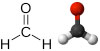
The science of mortuary science will be discussed. Sarah Yzenbaard will talk about the preparation and embalming techniques of the deceased. Embalming is the art and science of preserving human remains by treating them (in its modern form with chemicals) to forestall decomposition. The intention is to keep them suitable for public display at a funeral, for religious reasons, or for medical and scientific purposes such as their use as anatomical specimens. Traditional funeral home methods will be explained stepwise throughout the preservation process.
Dutch treat dinner at 6 PM
Talk begins at 7 PM |
Thursday, October 22, 2015
at the University of Detroit Mercy
Refreshments at 5:30 PM in Chemistry Building lobby
Talk begins at 6 PM in C114 Chemistry Lecture Hall
Famous Mad Hatters
Presented by: James F. O'Brien,
Professor Emeritus Missouri State University
The origin of the phrase "Mad as a Hatter" is due to the incidence of odd behavior on the part of workers in the early felt hat industry. Their odd behavior, or "madness", was the result of mercury poisoning contracted on the job. This presentation will discuss the recent mercury analyses done on the hair of Isaac Newton; the deterioration of the great mind of Michael Faraday; the bizarre behavior of Boston Corbett, the man who shot John Wilkes Booth, the assassin of Abraham Lincoln; and the possibility that mercury poisoning affected the behavior of other famous people such as King Charles II of England, the author William Makepeace Thackeray, and a number of famous artists, such as Rubens, Renoir, Dufy, and Klee. “Mad” women in History have been more difficult to locate. One eminent female whose health was affected by chemical exposure was Clare Boothe Luce. Her health problems while serving as U.S. Ambassador to Italy in the 1950’s will be discussed. Also, mercury analysis of the hair of Russian Tsarina Anastasia, wife of Ivan the Terrible, suggest she may have been poisoned.
Jim O'Brien was born on July 4, in Philadelphia, PA. He received a BS in Chemistry with honors from Villanova University and a Ph.D. in Chemistry from the University of Minnesota. Following postdoctoral work at the Los Alamos Scientific Laboratory in New Mexico, he joined the faculty at Southwest Missouri State University. Dr. O'Brien has received Southwest Missouri State University awards for Excellence in Research in 1989, 1994, and 1998. He has received Southwest Missouri State University awards for Excellence in Teaching in 1992 and 2001. In 2001 he also received the Governor of Missouri’s Award for Teaching Excellence. In 2002 the university named him Distinguished Professor. He is now retired and devoting himself to the history of chemistry, golf, bridge, Sherlock Holmes, Civil War history, and walking (formerly running).
|
Tuesday, September 15th, 2015 at 7 PM
Current Drug Topics
Presented by: Kimberly Zebrowski,
Forensic Scientist, Michigan State Police Crime Lab in Sterling Heights
Kimberly Zebrowski has been working as a Forensic Scientist for the Michigan State Police (MSP) for 12 years in the Controlled Substances Unit and on the Crime Scene Response Team. Her other responsibilities at the lab include coordinating the internship program, laboratory tours, the fitness program, and onboarding new employees. Outside of the MSP, she is a board member of the Midwestern Association of Forensic Scientists (MAFS), a member of the Disaster Assistance Recovery Team (DART), and a teacher of Introduction to Forensic Science at Oakland Community College.
Dutch treat dinner at 6 PM
Talk begins at 7 PM |
Tuesday, August 18th, 2015 at 7 PM
Alchemie: Mobile Games Higher Education
Presented by: Julia Winter,
CEO, founder at Alchemie and Chemistry Teacher at Detroit Country Day School
Through the use of game-based learning, we are building adaptive learning tools for organic chemistry. The data from the games can be translated back to instructors as a formative assessment, thus improving outcomes for both students and universities. Alchemie’s game suite includes three different games right now: Chairs!, Cyclo6-the mechanism game, and Chiros.

Dutch treat dinner at 6 PM
Talk begins at 7 PM |
Tuesday, July 21st, 2015 at 7 PM
The Chemistry of Fireworks
Presented by: Dale Sebes
Chemist and Licensed Pyrotechnician
Fireworks are one of the most spectacular outdoor shows. They produce amazing bursts of colors that take a variety of shapes. But how do they work? How do they burn into so many colors and patterns? And why, if not handled properly, can they cause serious injuries or even death? Dale Sebes of the Michigan Pyrotechnic Arts Guild will discuss all this and more.
Dutch treat dinner at 6 PM
Talk begins at 7 PM |
Tuesday, June 16th, 2015 at 7 PM
What Is It?
A Chemistry Show and Tell
A grown-up version of the exercise usually associated with schoolchildren will be enjoyed with a chemistry twist. Bring your most unique piece of lab glassware or something from your element collection. Tell how you discovered your treasure and discuss possible uses for your prized objects. What do you know about them, the object & the chemists who used them? Share your personal history through these objects. Can you imagine what we will see & share? So go search your laboratories, attics, basement, storage units, boxes & bags and bring that chemistry item that means something to you.
Dutch treat dinner at 6 PM
Talk begins at 7 PM
|
Tuesday, May 19th, 2015 at 7 PM
Oil & Vinegar Tasting
Presented by: Kurtis Sievers,
Cantoro Italian Market
From polyphenols to triacylglycerols, from alcohol to acetic acid, the ins and outs of extra virgin olive oil and balsamic vinaigrette will be discussed. Through the ages, Italy has been known for her fruity and palette pleasing Extra Virgin Olive Oils and Cantoro Italian Market follows this grand tradition. They carry a wide array of both flavored fused and non-flavored olive oils for all tastes and cooking needs. In addition, the mystique of barrel-aged vinegars from Modena, Italy, are well represented with both dark and light flavored balsamic vinaigrettes and their signature twelve year barrel aged four leaf balsamic.
Kurtis Sievers will be providing an assortment of samples to taste at Traffic Jam.
Dutch treat dinner at 6 PM
Talk begins at 7 PM |
Tuesday, April 21st, 2015 at 7 PM
The Role of the Quality Assurance Laboratories in the Medical Marijuana Industry
Presented by: Joseph Rutkowski,
Chief Chemist, IRON Laboratories, LLC
As cannabis is a complex plant with many elements that affect the human body, it is the presence of specific elements (THC, cannabinoids and terpenes), and their amounts and ratios to each other that can impact your health and well-being. IRON Laboratories identifies the existence and amounts of all known elements in the plant, concentrate and edible products. Joseph Rutowski will describe the techniques used to analyze cannabis including microscopic analysis and chromatographic techniques such as high performance liquid chromatography (HPLC), gas chromatography - flame ionization detection (GC-FID), and gas chromatography - mass spectrometry (GC-MS).
Dutch treat dinner at 6 PM
Talk begins at 7 PM |
Tuesday, March 17th, 2015 at 7 PM
Restoring Fish Habitat in the St. Clair and Detroit Rivers
Presented by: Mary Bohling,
Educator at Michigan Sea Grant Extension
To mitigate historical fish habitat losses in the St. Clair and Detroit Rivers, Michigan Sea Grant and a broad coalition of partners have conducted habitat restoration of 5 rock-rubble fish spawning beds, with plans for 2-3 more. Using an adaptive management approach, the team seeks to continually improve and inform future projects. This discussion will explore over 10 years of adaptive management assessments, lessons learned, project modifications, and monitoring improvements.
Dutch treat dinner at 6 PM
Talk begins at 7 PM
Tuesday, February 17th, 2015 at 7 PM
The Shroud of Turin,
The Convergence of Faith & Science, or an Unholy Hoax?
Presented by: Jay Otten, Ph.D.
Retired Manager of IP, Technology, and R&D Controlling, BASF
The talk will focus on the scientific evidence performed on one of the most highly studied ancient religious studies. Evidence will be presented so the audience can draw their own conclusions.
Dutch treat dinner at 6 PM
Talk begins at 7 PM
|
Tuesday, January 20th, 2015 at 7 PM
Rethinking Chemical Kinetics:
Using Stochastic Models
Presented by:
Andrew Ekstrom, University of Michigan-Dearborn
Most of us solve chemical kinetics problems using deterministic methods. Normally, these require a first order linear differential equation or a series of differential equations. Tonight, we will look at what happens when we use stochastic models to do the same thing.
Andrew Ekstrom has a Bachelor of Science in Physics and a Master of Science in Individualized Studies from EMU. He specialized in chemistry and applied stats. He is currently finishing a second Master’s degree in Applied and Computational Mathematics at U of M Dearborn. Here he is specializing in operations research and quality/reliability analysis.
Dutch treat dinner at 6 PM
Talk begins at 7 PM
|
Tuesday, November 18th, 2014 at 7 PM
Lurie Nanofabrication Facility
Presented by:
Khaled Mnaymneh, Lurie Nanofabrication Facility
The Lurie Nanofabrication Facility (LNF) at the University of Michigan is an open-access cleanroom facility that offers 24/7 semiconductor processing capabilities on production-level equipment supported by a professional staff.
With established technologies for a large range of applications in nanotechnology, the LNF is ideal for rapid feasibility assessment of ideas and pilot/low-volume products. Whether you want to assess new process adjustments for your product without compromising your current process or simply want to explore new product directions, the LNF provides the perfect environment for such exploratory work.
Dutch treat dinner at 6 PM
Talk begins at 7 PM
|
Tuesday, December 9th, 2014 at 6 PM
Holiday Field Trip
Tour of Two James Spirits in Detroit
Born out of the belief that family, friends and community are essential parts of life, Two James is far more than just an extraordinary product. Two James commemorates the exceptional lives of two great men who through hard work, perseverance and passion for life, were able to leave lasting impressions on the people they loved and the communities in which they lived.
Two James is located in Corktown, Detroit’s oldest neighborhood, and is the first licensed distillery in Detroit since Prohibition. Two James is committed to producing only the highest quality environmentally conscious handmade spirits utilizing locally sourced agricultural products with the aim of revitalizing the community and reinforcing the craft product movement.
Come try an assortment of samples & cocktails for this annual holiday trip. The distilling and bottling process will be described.
This tour costs $15. Please RSVP for this event by December 1st!!!
The tour begins at 6:00 P.M. and lasts for approximately one hour. Two James Spirits is located at 2445 Michigan Avenue, Detroit, MI 48216 |
| |
Tuesday, October 21st, 2014 at 7 PM
The Chemistry of Poison
Presented by:
Guy Wicker, Ph.D, CEO at Ovshinsky Innovation
Guy Wicker will speak about the history and toxicity of poisons. A range of chemicals will be discussed from common elements such as lead to the extremely rare case of thallium poisoning. An overview of historic poisons that have claimed the lives of millions will be discussed along with culprits that might be in your home. Some you need in order to live, while others you should avoid at all costs.
☠ ☠ ☠ ☠ ☠ ☠
"All substances are poisons; there is none which is not a poison. The right dose differentiates a poison and a remedy." -Paracelsus (1493-1541)
Dutch treat dinner at 6 PM
Talk begins at 7 PM |
Tuesday, September 16th, 2014 at 7 PM
Stained Glass
Presented by:
Tomak Baksik, Artist, Scientist & Owner,
Julian Glass, Nethercraft & Julian Bronze
If you’ve ever felt overwhelmed by the games of light and color of stained glass, then you’ve felt how well chemistry connects with art and beauty. The chemistry of stained glass overlaps with the very chemistry of glass: glass is obtained from the fusion of silicon dioxide sand or silica. Tomak Baksik of Julian Glass makes specialty stained glass surfaces for architectural, lighting and sculptural application, and custom stained glass sheet and tile. Years of bottom-up research have enabled distinctive advancements in the art, from druzy and mineral cluster simulations to life-sized neoclassical sculpture. Their colors are formulated to complement a painterly palette with both subtle and complex patterns.
Tomak Julian Baksik studied fine art and physics at the University of Michigan, and currently exhibits at several national tradeshows and festivals.
Dutch treat dinner at 6 PM
Talk begins at 7 PM |
Tuesday, August 19th, 2014 at 7 PM
Clear Candles
Presented by:
Dave McCall, Ph.D., Vaughan Industries
The discovery of paraffin in the mid-1800s revolutionized the making of candles. Paraffin is a by-product of the distillation of petroleum, or crude oil. Today, nearly all candles are made from paraffin and other hydrocarbons. Microcrystalline waxes are generally used as an additive and are a mixture of saturated hydrocarbons with a high melting point and a low oil content. The ideal formulation for the wax mixture is one with an ideal melting point and one that does not dilate as it cools. Dave McCall has been working with such formulas and will share the chemistry of candle making, including his recipe for clear (non-gel) taper candles.
Dutch treat dinner at 6 PM
Talk begins at 7 PM |
Tuesday, July 15th, 2014 at 7 PM
Green Chemistry Initiatives beyond the Classroom
Presented by:
George Ruger, Chair at Mid-Hudson ACS
Green Chemistry is a revolutionary philosophy that seeks to unite government, academic and industrial communities by placing more focus on environmental impacts at the earliest stage of innovation and invention. This approach requires an open and interdisciplinary view of material and product design, applying the principle that it is better to consider waste prevention options during the design and development phase, rather than disposing or treating waste after a process or material has been developed. George Ruger has been a strong advocate for green chemistry initiatives through the American Chemical Society and Beyond Benign. He will provide a background on the 12 Principles of Green Chemistry and share outreach ideas to educate youth groups.
Dutch treat dinner at 6 PM
Talk begins at 7 PM |
Tuesday, June 17th, 2014 at 7 PM
The Science of Soap Making
Presented by:
Caitlyn Pisarski, MSW, Motor City Soap Company
The Motor City Soap Company was founded in August 2012 by Caitlyn Pisarski. She makes handmade vegan soaps and all natural lip balms that are named after an occupation or hobby that requires manual labor. Motor City Soap Company soaps are made with QAI certified organic olive, sunflower, coconut and palm oils, sodium hydroxide and high quality certified organic essential oils. Her plant based ingredients are blended in small batches using the cold process method. Caitlyn will explain the art and science of her soap making techniques.disposal of the resulting fracking fluids.
Dutch treat dinner at 6 PM
Talk begins at 7 PM |
Tuesday, May 20th, 2014 at 7 PM
Fracking & Water Quality
Presented by:
Jim Nash, Oakland County Water Resources Commissioner
Jim Nash will talk about the environmental impact of fracking and new state-issued oil and natural gas drilling leases in Southeast Michigan. Fracking, the common term for slick water horizontal fracturing, drills wells up to two miles into the earth, then turns the drill bit horizontally to drill up to several miles. The resulting well is then filled with millions of gallons of fresh water mixed with sand, salts and chemicals. This mixture is then subjected to bursts of intense pressure to loosen rock formations and release natural gas. Many fear possible contamination of groundwater resources and have voiced concerns about disposal of the resulting fracking fluids.
Commissioner Nash will also discuss other regional issues such as the Detroit Water and Sewerage Department concerns as they relate to the Detroit bankruptcy.
Dutch treat dinner at 6 PM
Talk begins at 7 PM |
Tuesday, April 15th, 2014 at 7 PM
Precious Metals Refining
Presented by:
Thomas Gabe Kelley, Metalytical Labs
Precious metals are rare, naturally occurring metallic chemical elements of high economic value. Gold, silver, and platinum are the most widely known precious metals. These metals are used in jewelry, currency and as an investment due to their corrosion-resistant properties. Other metals of the platinum group also are considered precious including ruthenium, rhodium, palladium, osmium, and iridium. Gabe Kelley will describe the intricate scientific techniques of isolating individual pure elements from metal alloys. To obtain elemental analysis of incoming and outgoing metals, the use of X-Ray Fluorescence (XRF) Spectroscopy is used. Gabe will explain metallurgical assay methods and other processing procedures.
Dutch treat dinner at 6 PM
Talk begins at 7 PM |
Tuesday, March 18th, 2014 at 7 PM
Coffee Cupping
Presented by:
Sandi Bache Heaselgrave, Owner, The Red Hook
Coffee cupping, or coffee tasting, is the practice of observing the tastes and aromas of brewed coffee. A standard coffee cupping procedure involves deeply sniffing the coffee, then loudly slurping the coffee so it spreads to the back of the tongue. The coffee taster attempts to measure aspects of the coffee’s taste, specifically the body (the texture or mouthfeel, such as oiliness), sweetness (the perceived sweetness at the sides of the tongue), acidity (a sharp and tangy feeling at the tip of the tongue, like when biting into an orange), flavor (the characters in the cup), and aftertaste. Since coffee beans embody telltale flavors from the region where they were grown, cuppers may attempt to identify the coffee's origin.
The Red Hook is located in Ferndale and features Stumptown Coffee Roasters direct trade coffee. Sandi will be providing wonderful samples and conversation during this interactive tasting.
Attendees should plan on cleansing their palate by 7 PM to enjoy the cupping.
Dutch treat dinner at 6 PM
Talk begins at 7 PM |
Tuesday, February 18th, 2014 at 7 PM
Contraception: Accident vs. Intention
Presented by:
Lianna Trimble, Student/Amateur Historian
The presentation is a brief and rather idiosyncratic overview of the history of contraception. It covers different types of contraception used from ancient times to present day, including herbal remedies, early forms of IUDs, condoms, etc., as well as some rather unconventional gadgets that tried to tame the most voracious of lusts.
Warning: The material is of an adult nature and is not intended for minors
Dutch treat dinner at 6 PM
Talk begins at 7 PM |
Tuesday, January 21st, 2014 at 7 PM
Designing a Better Experiment
Presented by:
Andrew Ekstrom, University of Michigan-Dearborn
Design of experiments (DOE) or experimental design is the design of any information-gathering exercises where variation is present, whether under the full control of the experimenter or not. Industrial chemists utilize DOE tools on a regular basis, but these methods could be applied to any research project. This talk will focus on the different types of experimental design methods and their applications. Andrew will start with t-tests and ANOVA, discussing the pros and cons of each (there are mostly cons). Then he will discuss using factorial designed experiments, response surfaces, mixture designs and split plot designs. He will touch on power of different methods and efficiency of experimentation.
Andrew Ekstrom has a Bachelor of Science in Physics and a Master of Science in Individualized Studies from EMU. He specialized in chemistry and applied stats. He is currently finishing a second Master’s degree in Applied and Computational Mathematics at U of M Dearborn. Here he is specializing in operations research and quality/reliability analysis.
Dutch treat dinner at 6 PM
Talk begins at 7 PM |
Thursday, December 12th, 2013 at 5:30 PM
Holiday Field Trip
Tour of Valentine Distilling Co. in Ferndale
Join Brewing Chemistry for a tour of Valentine Distilling Co., Metro Detroit's premiere distillery.
Valentine Distilling Co., is located in a building which once housed the Wolverine Pool Table Company. In mid-2010, work began on the space resulting in a 1000-square-foot martini bar which looks into the 4000-square-foot distillery. As one of the first distilleries in the world to use a triple-grain recipe, Valentine Vodka proudly utilizes a blend of Red Michigan wheat, malted barley and corn, which all come directly from Michigan farmers and suppliers.
Former Wall Street trader Rifino Valentine launched Valentine Vodka in March 2009 after several years of “intense research and study” on making a quality handmade, ultra-premium vodka. In order to bring out the best qualities in each grain, their blend is carefully boiled and fermented one small batch at a time. The fermented mash is then triple-distilled to separate the pure vodka. From there, Valentine makes the critical decision, using his trained sense of smell and taste, on where to “cut” the best part of the pure vodka, which is present in the middle of each distillation run and is called the heart. Valentine Vodka’s clean, slightly sweet taste is a direct result of how narrow this heart is cut from the heads and tails. This perfect heart is then charcoal filtered for extra smoothness.
Come try an assortment of vodka samples & cocktails for this annual holiday trip.
There is no charge for this tour.
Light refreshments will be available.
Please RSVP for this event by December 9th!!!
Valentine Distilling Co.
161 Vester St., Ferndale, MI 48220 |
Tuesday, November 19th, 2013 at 7 PM
Happy Anniversary Brewing Chemistry!!
Celebrate 5 years of chemistry lectures in Detroit with the first speaker, Dr. Armitage.
Colors of the Past: Archaeological Chemistry of Natural Dyes
Presented by:
Ruth Ann Armitage, Ph.D.
Associate Professor of Analytical Chemistry, Eastern Michigan University
Enjoy the usual beer and conversation along with special anniversary prizes. Color fascinates us, and has for millennia. The vibrant mineral colors of Paleolithic rock art are the most striking example of color from the deep past. But archaeological evidence now indicates that humans may have been using plants to give color to fibers even earlier! This talk will describe how early experimental chemists prepared natural dyes from plants, shellfish, and insects and how the Armitage group at EMU works in collaboration with the DIA and archaeologists to identify these molecules today in textiles, lake pigments, and manuscripts.
Dutch treat dinner at 6 PM
Talk begins at 7 PM |
Tuesday, October 15th, 2013 at 7 PM
Chemical & Professional Lessons Learned in a 36 Year Career at the Chemical Company, BASF
Presented by:
Jay Otten, Ph.D.
Retired Manager of IP, Technology, and R&D Controlling, BASF
Jay Otten, Ph.D. has been an active member of the Detroit Section of the American Chemical Society. Dr. Jay Otten will speak about his career highlights and lessons learned in solving technical problems. Topics he will address include the challenges of chemistry, benefits to humanity, profitability and other professional lessons learned in his diverse 36 year career at BASF.
Dutch treat dinner at 6 PM
Talk begins at 7 PM |
Tuesday, September 17th, 2013 at 7 PM
Dry Plate Photography
Presented by:
Robert Beech
Dry plate, also known as gelatin process, is an improved type of photographic plate popularized in the 1880’s. This light sensitive emulsion technique was used during the Civil War and beyond. Robert Beech has been exploring the art of creating his own dry plate photographs. The science of the emulsion process and colloid chemistry will be explained. Don’t miss this exciting opportunity to have your picture taken using this historic technique!!
Dutch treat dinner at 6 PM
Talk begins at 7 PM |
Tuesday, August 20th, 2013 at 7 PM
Tastes Great, Less Killing:
The Benefits of a High Fat Diet
Presented by:
Arthur Bull, Ph.D., Professor of Biochemistry & Chair,
Department of Chemistry, Oakland University, Rochester, MI
This talk will be a, hopefully not too random, walk through lipid-land from the deadly trans-fats to the miracle lipids found in Cheez Whiz, beef, and kangaroo meat. The physical chemistry of lipids is crucial to the food industry whereas the biochemistry of lipids is crucial to health and disease. An attempt will be made to identify areas in which the two concerns meet, with emphasis on the nuclear receptor PPAR as a master regulator of lipid effects on biological systems. The PPAR story is a prime example of two seemingly unrelated areas of investigation finding common ground with the subsequent leap in understanding that accompanies such discoveries.
Dutch treat dinner at 6 PM
Talk begins at 7 PM |
Tuesday, July 16th, 2013 at 7 PM
Edible Chemistry
Presented by:
Chefs Matthew and Michael Romine,
Countryside Banquet Center, Imlay City, MI
Explore the science of food during this creative lecture and tasting. Twin chefs Matthew and Michael feature innovative cooking styles coupled with the finest local ingredients to create a truly amazing dining experience. They will be sharing their expertise from various venues worldwide. Together they will describe what some of your favorite foods are made of and their origins. Matthew and Michael will explain how cooking transforms food while samples will be enjoyed!
Dutch treat dinner at 6 PM
Talk begins at 7 PM |
Tuesday, June 18th, 2013 at 7 PM
Lumigen Instrument Center
Presented by:
Judy Westrick, Ph.D., Wayne State University
The WSU Lumigen Instrumentation Center was established in 1982 within the Chemistry Department in order to make expensive critical analytical instrumentation available to researchers within the University community, and beyond. Over the last several years, WSU has dramatically grown the facility with the addition of a large number of new state-of-the-art instruments in all disciplines. Each area is managed by knowledgeable and highly experienced professional staff to provide assistance in using the various techniques.
Judy Westrick is the director of the newly renovated Lumigen Instrumentation Center and conducts research in the Chemistry Department. As a leader in cyanotoxins and harmful algal blooms research, she has managed numerous occurrence studies, determined cyanotoxin susceptibility of drinking water treatment processes, developed analytical methodologies, and validated commercial analytical products such as cyanotoxin ELISAs. Her goal is to provide professional and high quality research and instructional support to Wayne State University researchers as well as to the greater Detroit and Michigan communities.
Dutch treat dinner at 6 PM
Talk begins at 7 PM |
Tuesday, May 21st, 2013 at 7 PM
Thermite Demonstrations
Presented by:
Clinton Mikek, University of Detroit Mercy
A thermite reaction (sometimes called a "Goldschmidt reaction") refers to a very exothermic process occurring between a metal oxide and a more active pure metal. The more reactive metal reduces the metal oxide, oxidizing itself and releasing a substantial amount of energy during the reaction.
Clinton Mikek has been wowing students at the University of Detroit Mercy for the past year with fiery displays from thermite demonstrations. Student favorites include the “Thermite Waterfall” and “Thermite into Water” demonstrations. He will show the set-ups for the various Thermite demos performed on a weekly basis and explain the chemistry that produces these dramatic displays and talk about how these demos are performed safely week after week.
Dutch treat dinner at 6 PM
Talk begins at 7 PM
|
Tuesday, April 16th, 2013 at 7 PM
The Chemistry of Fire
Presented by:
Jeffrey Santrock, Ph. D., General Motors LLC
Fire is a dynamic chemical process involving the rapid oxidation of a reduced substance (the fuel), usually by oxygen, with the release of heat, light, and combustion products. The foundations for our current scientific understand of fire can be traced to the earliest studies of chemical dynamics, when it was realized that conditions that result in ignition of a fuel depends not only on the elementary steps that contribute to the overall combustion reaction, but on heat and mass transfer as well. In the first part of his presentation, Jeff Santrock will show how that the historical development of theories of ignition and combustion were an outcome of the development of our understanding of chemical dynamics. Jeff will then apply these basic concepts of ignition and combustion to a few really cool examples of a fire investigation.
Dutch treat dinner at 6 PM
Talk begins at 7 PM
|
Tuesday, March 19th, 2013 at 7 PM
Ancient Patent Medicines to Modern Dietary Supplements:
Ancient Patent Medicines to Modern Dietary Supplements:
Two Energy dispersive X-ray spectrometry talks
from the labs of Dr. Mark Benvenuto & Dr. Liz Roberts Kirchhoff, University of Detroit Mercy
An energy dispersive X-ray fluorescence study of the composition of patent medicines and
nostrums archived at the Henry Ford Museum
Presented by: Andrew Diefenbach, University of Detroit Mercy
A selected grouping of patent medicines, permanently housed in the Henry Ford Museum in
Dearborn, MI, have been analyzed by energy dispersive X-ray fluorescence (EDXRF) spectroscopy
as well as proton NMR. Such materials were manufactured over a century ago under clandestine
circumstances, and thus the ingredients and recipes have never been made public. The findings for
metals and organics in these items will be presented.
Energy dispersive X-ray spectrometry as a means of studying the composition of dietary clays
Presented by: Nic H. Stroeters, University of Detroit Mercy
Dietary clays are food supplements that are consumed for a variety of health reasons. Since they
are not marketed as food, nor are they marketed as drugs, the FDA does not actively regulate them.
This research is a first examination of the elemental composition of nine different dietary clays, all
purchased off the shelf. Their findings of the elemental compositions of these clays will be presented
and implications discussed.
Dutch treat dinner at 6 PM
Talk begins at 7 PM
|
Tuesday, February 19th, 2013 at 7 PM
DIY Bronze Casting (Like a Pro)
Presented by:
Tomak Baksik, Artist, Scientist & Owner,
Julian Bronze, Nethercraft & Julian Glass
Sculptural bronze casting is usually done by commercial foundries, but if you're not afraid of a little hard work, or a LOT, YOU CAN DO IT YOURSELF. Tomak will talk about all steps in the process, with a focus on the How. He will explain the chemistry behind investments, waxes, alloys, pouring, and equipment. Believe it or not, most of the high cost of bronzes is not in the metal, it's the many complex steps in getting there. And with some shortcuts to making your own equipment, a serviceable foundry can be made for less than the cost of a single large bronze. Monumental bronzes are welded together from smaller casts, so there's almost no limit to what you can do.
Tomak Julian Baksik studied fine art and physics at the University of Michigan, and
currently exhibits at several national tradeshows and festivals. He has been sculpting
in bronze for more than 12 years.
Dutch treat dinner at 6 PM
Talk begins at 7 PM
|
Tuesday, January 15th, 2013 at 7 PM
Chemistry in Dentistry
Presented by:
Danny Miller
UDM School of Dentistry, Class of 2014,
UDM ASDA Communications Chair
UDM Alumni (BS Biology) Danny Miller will provide an insider’s view on the importance of Chemistry in Dentistry. Dentists rely on the use of chemistry in their daily careers. Danny will explain which aspects of chemistry are important to get admitted to and excel in Dental School. A brief description of required chemistry courses during Dental School will also be discussed. This entertaining and informative lecture will provide an opportunity to speak with current UDM Dental students.
Find out how you can get involved with UDM ASDA!!
Dutch treat dinner at 6 PM
Talk begins at 7 PM
|
Tuesday, December 11th, 2012 at 7:00 PM
Holiday Field Trip
Tour of B. Nektar Meadery in Ferndale
Join Brewing Chemistry for a tour of B. Nektar Meadery, Metro Detroit's Premier
Meadery. Our guest speaker will be owner and brewer Brad Dahlhofer, who will provide
a behind the scenes look at how their award-winning mead is made. His talk will focus
around mead recipe creation and finding inspiration; choosing ingredients; setting goals
and targets; fermentation techniques and blending batches. Using a number of honey
varieties combined with a diverse set of ingredients, this shop produces a wide selection
of meads. Come try an assortment of mead samples for this annual holiday trip.
There is no charge for this tour. Light refreshments will be provided.
Please RSVP for this event by December 1st!!!
|
Tuesday, November 20th, 2012 at 7 PM
Chemistry is for the Birds
Presented by:
Dr. Dwight Chasar, Ph.D.
Retired R&D Fellow from Emerald Performance Materials (BF Goodrich Co.) and professional bird watcher
Chemists like to think that chemistry is the central science. Recently, avian biologists and some chemists have examined more closely the chemistry associated with birds, using the tools we chemists have used for years to better understand facets of bird life and behavior. This presentation will discuss some recent as well as older research into this chemistry. The chemical pigments that give birds color, the chemicals that birds use for survival in the wild, chemicals that nearly extirpated raptors, and the use of stable isotopes to understand bird migration will be discussed. From the simplicity of bird poop to the complexity of bird DNA analysis, chemistry is playing a big role in understanding bird dynamics. Along the way bird photos should brighten up the chemistry discussions.
Dutch treat dinner at 6 PM
Talk begins at 7 PM
|
Tuesday, October 16th, 2012 at 7 PM
The Vibrant & Delicate Opal
Presented by:
Paul Haig,
Haig’s of Rochester
Opal is an amorphous form of silica related to quartz. Precious opal shows a variable interplay of internal colors and even though it is a mineraloid, it has an internal structure. Opal's internal structure makes it diffract light and take on many colors.
Paul Haig has been in the jewelry business for over forty years. As both a stone collector and cutter, Paul has been involved in the entire process of transforming a raw stone into a jewel. From the beginning, he has always worked with natural gemstones and not with imitations or synthetics. Additionally, Paul specializes in opals and has a vast collection and knowledge of the vibrant and delicate stone -- unequaled among area jewelers.
Dutch treat dinner at 6 PM
Talk begins at 7 PM
|
Tuesday, September 18th, 2012 at 7 PM
100th Anniversary Celebration of the Detroit Local Section
The Detroit Local Section of the American Chemical Society started one hundred years ago. On January 3, 1912, Detroit received its official charter from the National ACS through its origins with “The Society of Detroit Chemists” and “The Detroit Scientific Association”. Throughout 2012, the Detroit ACS Section has been celebrating its 100th Anniversary with a number of activities including hosting a Central Regional Meeting. Join us in reminiscing about the accomplishments of our award winning section. A brief history of the ACS and chemistry in Detroit will be presented followed by birthday cake and conversation.
Dutch treat dinner at 6 PM
Talk begins at 7 PM |
Tuesday, August 21st, 2012 at 7 PM
The Development of Calcium-Selective Chelants for Hard Water Control
Presented by:
Dave McCall, Ph.D.,
Vaughan Industries
Chelants, according to ASTM-A-380, are "chemicals that form soluble, complex molecules with certain metal ions, inactivating the ions so that they cannot normally react with other elements or ions to produce precipitates or scale.” Chelating agents are used to sequester metal ions in various applications such as the production of fertilizers, nutritional supplements, preservatives and water softeners. Ethylenediaminetetraacetic acid (EDTA) and other commonly used chelating agents have a higher affinity for iron than calcium. A calcium-selective chelant would assist in the water softening and metal cleaning process.
Dutch treat dinner at 6 PM
Talk begins at 7 PM
|
Tuesday, July 17th, 2012 at 7 PM
Household Waste
Is it Hazardous?
Presented by:
Mary Kay Heidtke, EHS Engineer
Magni Industries, Inc.
Garbage. You probably don’t think about it too much. However, what you don’t know can harm the environment. Leftover household products that contain corrosive, toxic, ignitable, or reactive ingredients are
considered to be household hazardous waste (HHW). Products, such as paints, cleaners, oils,
batteries, unused prescription medicines and pesticides, that contain potentially hazardous ingredients require special care when you dispose of them.
Improper disposal of HHW can include pouring them down the drain, on the ground, into storm sewers, or in some cases putting them out with the trash. The dangers of such disposal methods might not be immediately obvious, but improper disposal of these wastes can pollute the environment and pose a threat to human health. Many communities in the United States offer a variety of options for conveniently and safely managing HHW.
Learn about proper disposal options!
Dutch treat dinner at 6 PM
Talk begins at 7 PM
|
Tuesday, June 19th, 2012 at 7 PM
What Happened to my Barbie Doll?
Understanding how Plastics Age in Museum Collections
Presented by:
Clara Deck, Senior Conservator
The Henry Ford, Dearborn, MI
This is the Age of Plastics and museums have been collecting modern
materials for a long time. It is a Museum Conservator’s job to understand material deterioration and what can be done to preserve objects. Conservators rely on the long-term stability of many polymers for storage containers and adhesives. But what about “malignant plastics”? Learn about a few inherently unstable historical polymers that are causing nightmares for museums with modern collections.
Dutch treat dinner at 6 PM
Talk begins at 7 PM
|
Tuesday, May 15th, 2012 at 7 PM
Magic as Protoscience
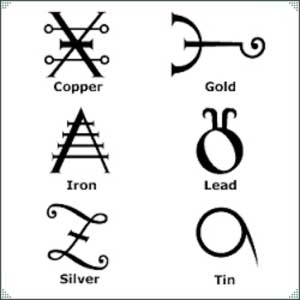
Presented by:
Dr. Jeffe Boats, Associate Professor of Mathematics
Chair of Mathematics,
Computer Science, and Software Engineering, University of Detroit Mercy
Ancient symbolisms and pre-scientific reasoning will be revealed in this talk, particularly with regard to the later development of chemistry and other sciences. Dr. Boats will present a historical view of alchemy as it relates to magic, chemistry, and general scientific thought. After the origins of alchemy are explored, he will describe its influences on modern science and fantasy fiction.
Aside from being an avid fan of symbols and their meaning, Boats teaches courses in Mathematics and Math Education, and conducts research in numerous areas of science, most notably an area of mathematics called Graph Theory. His work has applications to circuit design, cryptography, and intelligence/counterintelligence.
Dutch treat dinner at 6 PM
Talk begins at 7 PM
|
Tuesday, April 17th, 2012 at 7 PM
Who’s in my Lab?
Gibb’s Free Energy Meets the Ohm
Presented by:
Kevin O’Mara,
Owner of Midwest Analytical Services, Inc.
Midwest Analytical Services, Inc. (MAS) is known for material testing
including wastewater, groundwater, wipes, hazardous waste, sludge,
polymers, resins, asbestos, contaminated soil and air. Kevin O’Mara will discuss the dynamics of working together in a laboratory or other work settings. Adult spend a third of their lives at work on average. This talk will explore the psychology of the workplace at both scientific and non-scientific
organizations.
Dutch treat dinner at 6 PM
Talk begins at 7 PM
|
Tuesday, February 21st, 2012 at 7 PM
The Role of Chemistry in the Development of Regional Styles of Beer and Ale
Presented by:
Mark Allen Thomson, Ph.D., Associate Professor of Chemistry,
Department of Physical Sciences, Ferris State University
Have you ever wondered about how beer is made and the role that chemistry or microbiology
plays in the process? Dr. Mark Thomson, a.k.a. “the Professor of Brewology” will briefly discuss the
basic process of beer fermentation from a small-scale perspective. From malting the barley and
mashing the malt, through fermentation and conditioning, to packaging the finished product, particular
attention will be paid to the role of chemistry in the development of regional beer styles and traditions.
Connections will be made between steps in the process and results in the final product including
color, bitterness, aroma, body, and taste. Many of these connections will illustrate the subtle, but
important role that small chemical details can play.
Learn the science behind making beer and the art of distinguishing different beer styles.
Dutch treat dinner at 6 PM
Talk begins at 7 PM
|
Tuesday, January 17th, 2012 at 7 PM
Chemists Without Borders
Presented by:
Meghann Murray
Chemists Without Borders is a non-governmental organization involved in international development work designed to solve humanitarian problems through chemistry and related activities. As a public benefit, non-profit organization, the primary goals of Chemists Without Borders include, but are not limited to: 1) providing affordable medicines and vaccines to those who need them most, 2) providing clean water through water purification technologies, 3) supporting sustainable energy technologies, 4) encouraging open access to scholarly chemistry research articles throughout the world, and 5) advocating a better understanding of chemistry through education.
Find out how you can get involved with Chemists Without Borders!!
Dutch treat dinner at 6 PM
Talk begins at 7 PM
|
Thursday, December 1st, 2011
at 6:30 PM
Holiday Field Trip
Tour of T-Plex,
the Model T Automotive Heritage Complex, Inc.
Presented by:
Matthew J. Mio, Ph.D., Associate Professor,
Department of Chemistry & Biochemistry, University of Detroit Mercy
Join Brewing Chemistry for a tour of T-Plex, the original Ford Piquette
Avenue plant. Our guest speaker will be Guy Wicker, Ph.D. who will be
presenting a historical and current view of battery chemistry as it relates
to vehicles. The basics of electrochemistry and batteries will be discussed
while viewing various Model Ts and other Piquette-era Fords!!
The Ford Piquette Avenue plant is well preserved and largely unchanged
from its original 1904 appearance. The exterior of the building is
immediately recognizable as the same building shown in early photographs
- still in its original red brick, complete with original fire escapes and
windows. A visit to the third floor is like stepping back in time. One is
immediately impressed by how much it resembles the operating plant of
1905. It is virtually unchanged. The third floor has never been painted since
Ford Motor Company left in 1910.
Please RSVP for this event by November 25th!!!
$10 per person will be collected at the beginning of the tour.
The tour begins at 6:30 P.M. The T-Plex is located at 461 Piquette St., Detroit, MI 48201.
For directions, visit www.tplex.org
Contact Meghann at 313-993-1259 or meghann@brewingchemistry.com to RSVP
|
Tuesday, November 15th, 2011 at 7 PM
Breaking Bad Chemistry
‘Breaking Bad’ and the ‘CSI Effect:’
Chemistry and Television during the Geek Revolution
Presented by:
Matthew J. Mio, Ph.D., Associate Professor,
Department of Chemistry & Biochemistry, University of Detroit Mercy
Matthew J. Mio will discuss the effect of recent media, with an emphasis on such popular TV shows as ‘Breaking Bad’ and ‘CSI: Crime Scene Investigation,’ on the public perception of Chemistry in the United States and worldwide. Do positive or negative portrayals of Chemists influence the career choices of today’s youth? Has Geek Culture glorified the practice of science or encumbered it? Stop by this month’s “Brewing Chemistry” to join in the discussion!
Dutch treat dinner at 6 PM
Talk begins at 7 PM
|
Tuesday, October 18th, 2011 at 7 PM
Bugs in your Water?
Determining Water Pollution through Bug Hunts
Presented by:
Peter J. Benz, Water Pollution Inspector,
Wayne County Department of the Environment, Water Quality
Management Division
Peter J. Benz will discuss Bug Hunts as a high quality water pollution
evaluation system. 'Made in Detroit' Benz, a Family Patriarch, is the Vice-
Chairman of the Friends of the Detroit River & SSG US Army Retired. He
will use a 'Power Point' created by Susan Thomson, WCDOE Coordinator of
Bug Hunts & will be assisted by his former work partner Sushy Valikodath,
Chemist WDOE Land Management Division.
Dutch treat dinner at 6 PM
Talk begins at 7 PM
|
Tuesday, September 20th, 2011 at 7 PM
Emergency Management
Presented by:
Kenneth Bresnan,
Area Coordinator for the National Disaster Medical System in Michigan
The National Disaster Medical System is a partnership among four federal agencies and private community hospitals that provides a medical contingency back-up system to protect the health of the nation’s citizenry during catastrophic events. Kenneth Bresnan, Area Emergency Manager for the Department of Veterans Affairs and Area Coordinator for the National Disaster Medical System in Michigan will give you detailed information on what constitutes a disaster, to what major threats is this nation prepared to respond, and how local, county, state and federal agencies interact with Non-governmental Organizations (NGOs) during cataclysmic events. Mr. Bresnan will also detail why The Federal Emergency Management Agency (FEMA) is such a very powerful agency, provide constitutional background on who will command those Black Helmeted Guys in Chemical Suits during the next OUTBREAK, and dispel any rumors that the government has a secret plan to combat a zombie outbreak. The presentation will be fun and interesting, and include a “FILL IN THE BLANK” questionnaire for a true classroom experience.
Dutch treat dinner at 6 PM
Talk begins at 7 PM
|
Tuesday, August 16th, 2011 at 7 PM
What is a Watt?
The Economics, Science, Engineering, & Politics of Energy
Presented by:
Kevin O’Mara,
Owner of Midwest Analytical Services, Inc.
Midwest Analytical Services, Inc. (MAS) is known for material testing
including wastewater, groundwater, wipes, hazardous waste, sludge,
polymers, resins, asbestos, contaminated soil and air. Recently, Kevin
O’Mara has researched the use of alternative energy in his laboratory
facility. He has installed solar panels, wind turbines, and a solar thermal
extraction tube system at MAS. Kevin will describe how these systems
were incorporated and how the energy has been converted to help offset
electrical costs.
Dutch treat dinner at 6 PM
Talk begins at 7 PM
|
Tuesday, July 19th, 2011 at 7 PM
Biodegradability Testing Services at
NSF International
Presented by:
Pat Davison, Senior Project Manager,
Engineering Research Services
NSF International, Ann Arbor MI
In response to emerging environmental concerns, companies are designing a variety of products and packaging materials to degrade after they are
discarded. The presentation will provide a summary of the different types of testing services currently conducted by NSF International designed to help companies generate independent, third-party data from an accredited testing laboratory to substantiate the product’s degradability performance claims.
Dutch treat dinner at 6 PM
Talk begins at 7 PM
|
Tuesday, June 21, 2011 at 7 PM
Analytical and Therapeutic Applications of
Gold Nanoparticles
Presented by:
Bulent Mutus, Ph.D., Professor and Research Chair
Department of Chemistry & Biochemistry, University of Windsor, ON
The talk will present the recent work from the Mutus Lab on the use of gold
nanoparticle-based reagents for detecting hydrogen sulfide and the identification of
thiol residues in proteins that are susceptible to modification. In addition, the design
and testing of gold nanocomposite-based nitric oxide releasing bandages for wound
healing applications will be described.
|
Tuesday, May 17, 2011 at 7 PM
Could Forensics get More Students to Major in Science?
Presented by:
Anthony Sky, Ph.D., Professor and Chair
Department of Natural Sciences, Lawrence Technological University
In 2004, the National Science Board claimed that there is a decline in the number of American students training to be scientists and this could threaten the economic welfare and security of our country. Others say, large numbers of aspiring science majors, perhaps as many as half, are turned off by unimaginative teaching and change their majors before graduating. In 2007 the TIMSS (Trends in International Mathematics and Science Study) results, indicated that 44% of American High School Juniors where not proficient in science.
Join Anthony Sky, Professor of Chemistry, as he opens his forensic files to reveal a few of the tactics he has employed to engage more student in science.
|
Tuesday, April 19, 2011 at 6:30 PM
Tour of Traffic Jam & Snug
A behind the scenes look at the science of brewing beer and making cheese
Since 1965, the Traffic Jam & Snug has been one of Detroit's hidden treasures. They are known throughout Midtown for their in-house bakery, microbrewery, and dairy, their curiously intimate multi-level dining rooms, and an eclectic menu of made-from-scratch dishes. They only use the best, freshest ingredients. Each day, their bakery turns out a new Bread of the Day, from authentic ethnic crusted rolls and vegetable breads to whole grain sourdoughs and cheese loaves. A shamefully delicious selection of pies, cakes, and cookies are made there too, not to mention their very own hot fudge and ice cream.
Their award-winning cheeses and beers are a local favorite. They actually use the same equipment for brewing beer and making cheese. On December 18, 1992, after a decade-long legal battle, Michigan became the last Midwest state to enact a brewpub law. Traffic Jam became the first brew-pub in the state of Michigan. Since then, the Traffic Jam has been brewing an uncommon, ever-changing selection of hand-crafted beers.
Traffic Jam & Snug uses its homemade cheese, beer and baked goods in the restaurant. You can also buy the cheese -- including the Asiago varieties -- and bakery items to take home. Or find them at a local farmer's markets, including Eastern Market on Saturdays and Royal Oak on Fridays.
Join us to explore and sample the chemistry of beer brewing and cheesemaking! The tour will begin at 6:30 PM, but feel free to stay for dinner after.
|
Tuesday, March 15, 2011 at 7 PM
Elemental Analysis of Kelp Dietary Supplements
Presented by:
Danielle Garshott
University of Detroit Mercy
Herbal kelp has become a popular dietary supplement. Some types of seaweed and other aquatic plants have a high affinity for heavy metal uptake and have even been used for bioremediation. Current research has shown that some kelp products have been contaminated with arsenic and other heavy metals. Herbal supplements are regulated by the Food and Drug Administration (FDA), but not as strictly as drugs or foods.
Garshott collected seventeen kelp dietary supplements, purchased from local health food or drug stores, to analyze by energy dispersive X-ray fluorescence (EDXRF) spectroscopy. The supplements were examined for the presence of arsenic, lead, and mercury. Before analysis of the sample set, a series of standards for were created, because established NIST standards for such food supplements do not appear to exist. The findings for these items will be presented along with the method for heavy metal standards production.
Dutch treat dinner at 6 PM
Talk begins at 7 PM
|
Tuesday, February 15, 2011 at 7 PM
FilterPave® Porous Paving System
An Innovative Hard Surface Pavement Using Recycled Glass
Presented by:
David Bower, Ph.D., Senior Research Chemist
BASF Corporation
Billions of gallons of untreated stormwater pollute our lakes rivers and oceans every year. Conventional concrete and asphalt pavements concentrate these pollutants at the storm drains. Whether it is through a combined sanitary sewer system or a local detention pond, treatment is expensive. In most areas the stormwater remains untreated allowing the pollutants to flow directly into our waterways.
The Filterpave® system provides several advances over traditional hard surface pavements which address these and other environmental issues in an attractive and cost-effective manner. It combines specially treated post-consumer recycled glass with a two component polyurethane binder to create a porous pavement that captures stormwater allowing it to slowly migrate into the soil. This nearly eliminates stormwater runoff and helps replenish the local aquifer with clean, naturally filtered water.
The porosity of Filterpave pavement allows air and water to flow through the composite so it will not hold heat like conventional materials reducing the “heat island effect”. This pavement is appropriate for parking lots, driveways, sidewalks, patios, golf cart paths and other light to medium duty traffic areas,. The components are processed using conventional construction equipment and the installed pavement is easy to repair if damaged. FilterPave pavement is aesthetically pleasing and is offered in several colors providing opportunities for unique site design alternatives.
Dutch treat dinner at 6 PM
Talk begins at 7 PM
|
Tuesday, January 18, 2011 at 7 PM
Contrast Agents:
Exploring the Chemistry of MRI and Asymmetric Catalysis
Presented by:
Matthew J. Allen, Ph.D., Assistant Professor
Department of Chemistry, Wayne State University
Research in the Allen laboratory is focused on the lanthanide chemistry of contrast agents for magnetic resonance imaging (MRI) and catalysts for aqueous asymmetric bond formation. He will present the chemistry behind how contrast agents for MRI work and how his group is working to improve contrast agents using chemistry in an interdisciplinary way. Specifically, Matt Allen will talk about his work with divalent europium and with binuclear lanthanide complexes as potential advanced contrast agents. These strategies could produce contrast agents that are effective where current agents are not.
Dutch treat dinner at 6 PM
Talk begins at 7 PM
|
Wednesday, December 15th, 2010 at 6:30 PM
Holiday Field Trip
Mind Body & Spirits Tour and Dinner
Join Brewing Chemistry for a tour of Mind Body & Spirits, downtown Rochester's new eco-
conscious restaurant. Mind Body & Spirits is a certified Organic eatery with a vast selection of yummy food and libations. Their menu plainly defines the dishes that are vegan, vegetarian, gluten-free and dairy-free. They also put effort into creating their dishes for simple removal of any items that might be objectionable to the food-conscious or food-sensitive diner. Even most of the drinks are organic and they feature locally made beer, wine, and liquor.
Mind Body & Spirits is located in a 100+ year old building which was renovated using many of the latest and century old technologies to operate as sustainable as possible. The building tour will include learning about harnessing solar energy in many forms, from the PV (Photo Voltaic) solar panels that power the building to the solar hot water panels and the passive solar (Trombe wall & Solar water tubes) in their onsite greenhouse. The building is heated and cooled by a Geo thermal system that consists of (20) 200 ft deep wells. Mind Body & Spirits also has an extensive recycling and repurposing programs including their bio digester that turns all of their food waste into a nutrient rich soil fertilizer.
Please RSVP for this event by December 3rd!!!
The Dutch-treat dinner and tour begins at 6:30 P.M.
Mind Body & Spirits is located at 301 South
Main Street in Downtown Rochester.
For directions, visit http://www.mindbodyspirits.com/
|
Tuesday, November 16th, 2010 - 7:00 PM
Brewing Chemistry
The Chemistry of Alcohol Production
Presented by:
Guy Wicker, Ph.D.
Beer is one of the world’s oldest beverages and has played an important role in our society. There is an art to the science of brewing beer and producing alcohol. The brewing process is made of several key steps that can be altered to yield a unique taste. Guy Wicker will discuss what chemicals are in your brew and what they do to you. General fermentation techniques and outcomes will be presented along with yeast metabolism, organic by-products, aging, and distillation. Brewing obstacles such as ethanol cleanliness and bacteria will also be addressed.
Dutch treat dinner at 6 PM
Talk begins at 7 PM
|
Tuesday, October 19th, 2010 - 7:00 PM
Forensic Toxicology For Chemists*
An Informal Discussion of the non-CSI World of Forensic Science
(*···· And Anyone Interested, Curious, with an open Calendar, or Just Passing By)
Presented by:
Gary W. Kunsman, Ph.D., DABFT
Chief Forensic Toxicologist, Oakland County Medical Examiner
OJ Simpson, CSI, Law and Order and other popularizers of Forensic Science, the significant advances in DNA analytical technology, massive increases in funding for law enforcement related/directed DNA Laboratories, and the proliferation of University Forensic Science programs (both Undergraduate and Graduate) have produced an increasingly large population of largely misinformed and ill-informed people concerning the specific nature and practice of the Forensic Sciences. This presentation will focus on the general field of Forensic Toxicology and the specific subdivisions encompassed within that discipline: Postmortem Toxicology, Behavioural Toxicology, and Forensic Urine Drug Testing (FUDT). The format of this presentation is intentionally informal so as to provide participants the greatest opportunity to become acquainted with this area of Forensic Science and allow them to pursue areas of general and current interest to the population represented; potential examples of which may range from the use, analytic methodologies employed, and behavioural effects associated with the use of Alcohol related to Automobile Driving or the recently passed law allowing the use of Marijuana as a medicant, the period of time following drug use during which a positive Urinalysis result may occur, etc.
Dutch treat dinner at 6 PM
Talk begins at 7 PM
|
Tuesday, September 21st, 2010 - 7:00 PM
Hair Care: High Science or Fluff Bunny Chemistry?
Presented by:
Jay G. Otten, Ph.D., BASF Corporation
The focus will be on the science of healthy & good looking hair. High powered microscopic images of healthy and damaged hair and the impact of the chemical industry on maintaining healthy, well groomed hair will be shown. Technologies include shampoos, conditioning agents, and other products. Differences in ethnic hair and treatment thereof will be described, and future consumer desires will be shared.
Dutch treat dinner at 6 PM
Talk begins at 7 PM
|
Tuesday, Auguts 17th, 2010 - 7:00 PM
Can A Wet Paper Towel Burn?
Presented by:
Jeffrey L. Finnan, Ph.D.
High school chemistry would have been much more entertaining if Jeff Finnan had been our teacher. Jeff Finnan also known as “Dr. J.,” is not your typical teacher. He has a 20-year background in corporate research and development in the vitamin and fragrance & flavor industries. Dr. J. inspires his students through engaging lectures and exciting chemical demonstrations. One of his favorites is liquid nitrogen. You can participate with him as does his students exploring the history and use of liquid nitrogen as well as the states of matter.
But wait? What about that paper towel? A wet one burning? How could we do it with only the paper towel itself as fuel? How does liquid nitrogen figure into this? Come see to find out what and how.
Dutch treat dinner at 6 PM
Talk begins at 7 PM
|
Tuesday, July 20, 2010 - 7:00 PM
They Called it ‘Smoked Sausage’
Presented by:
Norm Howe, Ph.D
Sr. Partner, Validation & Compliance Institute
Do you enjoy good food? Do you like going to a great restaurant with your friends and forgetting about your worries for an evening? How do you know if that food is fit to eat? How would you tell if a pill that you are going to take is safe and effective? If you take your child for a vaccination how do you know that the syringe is sterile? How do you know if your pet's food contains every nutrient needed to sustain life?
There are people who worry about those questions so you don't have to. They work for the US Food and Drug Administration. US FDA regulates food, drugs, cosmetics, and medical devices; about 25% of US GDP. But there was a time when FDA didn't exist. There was a time when you really did have to worry about what your were eating.
This is the story about how and why FDA came into existence. Unfortunately we weren't proactive in creating FDA, so this tale gets a bit graphic. It spans the time when America was becoming the world's first continental economy. It includes the first introduction of science into food and drug production. It tells why so many people died.
In this time of increasing federal deficits we are witnessing extreme controversy over the role of government. It costs a lot of money to regulate 25% of the US economy, both in tax dollars to support the agency but even more in corporate costs to comply with the law. Is it worth it? We will look at the development of one agency, FDA. You be the judge whether this story can be generalized to other agencies.
Dutch treat dinner at 6 PM
Talk begins at 7 PM |
Tuesday, June 15, 2010 - 7:00 PM
How Chemistry has Changed the Yo-Yo
Presented by:
Steve Scribner,
Ph.D, Associate Professor of Chemistry, Yo-yo performer and collector
Marygrove College, Detroit, MI
Brewing Chemistry explores material science and the development of the yo-yo. Traditionally a wooden toy made from various hardwoods, the yo-yo has undergone significant changes as different plastics and metals have been used to produce new models. In the last 50 years, many polymers have been used to increase the durability and uniformity while decreasing production costs. Yo-yos have been shaped into various styles and forms for better performance, novelty, gifts or advertisement. In the last 20 years, materials such as graphite, aluminum and magnesium have been used to develop high performance yo-yos. This high performance, however, comes with a high price tag, upwards of several hundred dollars per yo-yo. The presentation will include a collection of yo-yos made from different types of materials, different styles and of course a yo-yo demonstration.
Dutch treat dinner at 6 PM
Talk begins at 7 PM |
Tuesday, May 18, 2010 - 7:00 PM
The Alchemy of Mead
Presented by:
Diana Phillips
Ph.D, Associate Professor and Program Director of Chemistry
Kettering University, Flint, MI
Mead - often called honey wine - is the world's oldest fermented beverage. It's place in history is well documented in song, myth and legend, but what gives each mead an individual quality has gone largely unstudied. Phillips and her fellow mead makers in the International Mead Association (IMA) have set out to change all that. Phillips is part of the Research Committee of the IMA, working on understanding how the variables integral to making mead affect the outcome of the mead produced. Dr. Philips’ mead tastes good too - her habanero pepper mead was judged best of show from among more than 4,700 wines at a competition conducted by WineMaker magazine in Manchester Center, Vt. Join us to learn about the chemistry of mead and sample all that it has to offer.
Dutch treat dinner at 6 PM
Talk begins at 7 PM |
Tuesday, April 20, 2010 - 7:00 PM
The Chemistry of Coffee
Presented by:
James Cadariu
Roastmaster
Espresso Source, International and the Great Lakes Coffee Roasting Company
Learn about the science of roasting and brewing coffee. James Cadariu has trained in Italy at Lavazza, Europe's largest coffee roaster, doing espresso cuppings and analyses of coffee sourcing, blending and roasting. With Cimbali, the Italian espresso machine manufacturer, he has trained extensively on the latest superautomatic technology. Having traveled extensively in Europe and the US and being an amateur cook, he has an extensive background in the art and science of making coffee. The Great Lakes Coffee Roasting Co. is a Detroit-area artisan roaster focusing on Fair Trade Organic coffees. Samples will be available!!
Dutch treat dinner at 6 PM
Talk begins at 7 PM |
Tuesday, March 16, 2010 - 7:00 PM
Seasonal Changes in Mammals
Presented by:
Lois Rheaume, Naturalist
Seven Ponds Nature Center (Dryden, MI)
Brewing Chemistry explores natural science this month. Lois Rheaume has a strong background in studying Michigan native plants and animals. She will explain how animals can survive in their environment and the adaptations of mammals from summer to winter months. The science of color change and other animal modifications will be described while focusing on the tenets of naturalism. This is a unique opportunity to view rare taxidermy specimens up close. |
Tuesday, February 16, 2010 - 7:00 PM
Chocolate Tasting
Explore the Science of Chocolate Making
Presented by:
Nick Corden
Corden Chocolates was established in 1918 by Samuel P. Corden after he migrated from Greece to Michigan. His first shop was in Detroit on Woodward Ave. next to the Loop Theater. He also opened another candy store in downtown Detroit next to the Senate Theater called the Senate Sweet Shop. In the 1950s, he opened Corden Chocolates in Inkster, currently the only open location.
Nick Corden, the grandson of founder Samuel P. Corden, will be speaking about his family business. Corden Chocolates offers a unique mix of tradition and quality that is rare these days. Nick will be speaking about the candy making process while we sample chocolates he has made. |
Tuesday, January 19, 2010 - 7:00 PM
Passive Ammonia SCR for Lean Burn SIDI Engines
Presented by:
Kevin Perry,
GM R&D Center
In this talk we present a new concept for lean NOx aftertreatment system for stratified spark-ignition direct-injection (SIDI) engines. This new concept offers significant cost advantage over the conventional lean NOx trap (LNT) or urea selective catalytic reduction (SCR) systems. Transient dynamometer test results will be presented and the potential and limitations of this new concept will be discussed. |
Tuesday, December 15, 2009 - 6:00 PM
The Science of Bowling – Holiday Field Trip
Designing A Better Bowling Ball:
Fun with Structure-Property Relationships
Presented by:
Heinz Plaumann,
BASF Corporation
The coverstock of high performance, professional level bowling balls is often made of with a custom-designed polyurethane material. In this presentation, Heinz will discuss some of the elements going into bowling ball design and performance, where “hook is everything”. The tendency for different materials to absorb the oil used to lubricate the lane is described as well as other surface effects such as polishing and surface wear.
There are no guarantees, of course, that attending this presentation will improve your personal bowling score…but it should be fun!
The talk will take place at Thunderbowl Lanes, the second largest bowling alley in the country. Heinz Plaumann will give his entertaining lecture in a conference room while we dine on pizza and beer (or other beverage of your choice). After his talk, we will hit the lanes!! The cost of this event is $10 and will cover the cost of food, drinks, bowling and shoe rental.
Please RSVP for this event by December 8th!!!
Event Location Change:
The evening of libations, edible delights and science inquiry begins at 6:00 p.m. at Thunderbowl Lanes, 4200 Allen Rd., Allen Park, MI, 48101. For directions, visit http://thunderbowl.org |
Tuesday, November 17, 2009 - 7:00 PM
Ribosome Chemistry
Presented by:
Annie Labut,
University of Michigan
The Nobel Prize in Chemistry 2009 was awarded to Venkatraman Ramakrishnan, Thomas A. Steitz and Ada E. Yonath for their studies of the structure and function of the ribosome. Ribosomes are molecular machines that make proteins out of amino acids. One of the central tenets of biology is that DNA makes RNA, which then makes protein. The DNA sequence in genes is copied into a messenger RNA (mRNA). Ribosomes then read the information in this RNA and use it to produce proteins. Annie Labut will explain the steps and regulation of ribosome assembly. The significance of the ribosome in biochemistry will be explored. |
Tuesday, October 20, 2009 - 7:00 PM
Forensic Photography
Presented by:
Joe Sopkowicz
Explore the evolution of photography related to forensic science in this captivating lecture. The chemistry of shooting and processing photographs will be explained throughout the transition from film to Polaroid to digital. Forensic photographer Joe Sopkowicz will explain the science of photography along with the reasons for its use in forensic applications.
Joe Sopkowicz will provide insight to the investigation process through his collection of crime scene and death photographs. The process and examination of crime scene photography can be related to toxicology, DNA, fingerprinting and other types of evidence.
WARNING: MAY CONTAIN GRAPHIC AND DISTURBING IMAGES |
Tuesday, September 15, 2009 - 7:00 PM
The Science of Halloween
Presented by:
The Motor City Haunt Club
Second only to Christmas, Halloween is the biggest shopping holiday for retailers, generating more than $6 billion in sales. From professional props in haunted attractions to amateur home decorating, the science of Halloween will be revealed in this entertaining presentation. Members of the Motor City Haunt Club will explain the technical side of the holiday including animatronic, pneumatic, electrical, lighting, and sound systems… and of course, chemistry!!
Unmask the materials that disgust you. Experience a bone-chilling presentation that combines the wonder of science with the thrills and chills of Halloween! |
August
18, 2009 - 7:00 PM
Formulation Process & Colloid Chemistry
Presented by:
Dave McCall,
Vaughan Industries
Formulation chemistry is one of the
disparities in the chemistry industry. There are many jobs,
but extremely few degree programs that adequately train students
for a formulation position. As a result, most formulation
chemists are either self taught or have in essence been apprenticed
under experienced researchers.
Simply put, formulation is
the mixing of compounds which do not react in order to get
a mixture with the desired characteristics. Examples of formulations
are adhesives, paints, inks, cosmetics, detergents and many
pharmaceutical products. Formulation involves the study of
mixing, phase equilibria, solutions, surface chemistry, colloids,
emulsions and suspensions.
Dave McCall will describe the process
of converting a collection of materials into formulas. |
July
21, 2009 - 7:00 PM
What’s That Made of?
X-ray Fluorescence of Coins as Artifacts
Presented by:
Dr. Mark Benvenuto
University of Detroit Mercy
Coins are historically collected based
on their beauty and value. Dr. Mark Benvenuto takes a chemist’s
approach to collecting coins and analyzes their composition.
The various alloys that make up coins can tell us a lot about
how they were made and give insight to the culture they are
from.
Mark Benvenuto performs elemental analysis
of coins by using X-ray fluorescence (XRF) spectroscopy.
XRF is a non-destructive technique widely used for environmental,
industrial, pharmaceutical, forensic, and scientific research
applications to measure the concentration of elemental constituents
or contaminants. Dr. Benvenuto will focus on his research
of three main groups of coins including the biblical Judean
widow’s mites, Siamese bullet coins and medieval Korean
coins. |
June 15, 2009 - 6:30 PM
The Chemistry of Beer
Lecture and tour will reveal the
science of brewing beer and making cheese
Presented by:
Chris Reilly, Master Brewer and Cheesemaker
The Traffic Jam and Snug, established
1965, is truly one of Detroit's hidden treasures. Known throughout
Midtown for their in-house bakery, microbrewery, and dairy,
their curiously intimate multi-level dining rooms, and an
eclectic menu of made-from-scratch dishes, there is simply
nothing quite like The Traffic Jam.
They only use the best, freshest ingredients.
Each day, their bakery turns out a new Bread of the Day,
from authentic ethnic crusted rolls and vegetable breads
to whole grain sourdoughs and cheese loaves. In fact, head
baker Pete Waldamier stopped keeping records of recipes years
ago. A shamefully delicious selection of pies, cakes, and
cookies are made there too, not to mention their very own
hot fudge and ice cream.
Their award-winning cheeses and beers
are a local favorite. They actually use the same equipment
for brewing beer and making cheese. On December 18, 1992,
after a decade-long legal battle, Michigan became the last
Midwest state to enact a brewpub law. Since then, the Traffic
Jam has been brewing an uncommon, ever-changing selection
of hand-crafted beers. Take, for example, the Grand Theft
Pilsner, or the Java Porter. Available in 14 or 22 oz. pours,
or try them all with our 8 oz. sampler glasses.
Join us to explore and sample the chemistry
of beer brewing and cheesemaking! The tour will begin at
6:30 PM, but feel free to stay for dinner after. |
May 19, 2009
Neurochemistry
The Sodium Pump: What is it?
How is it involved with nerve cell functioning?
How do we study it?
Presented by:
Kevin T. Onofrey, Michael J. Janice and Mary Lou Caspers
Department of Chemistry and Biochemistry University of Detroit Mercy Detroit,
MI
The (Na+ + K+)-ATPase, also known as the sodium pump, maintains ion balance in
cells by transporting Na+ and K+ across cell membranes. It is composed of 2?
and 2? polypeptide chains and several genetic forms of the ? chain exist. Using
a [3H]-labeled probe, we have shown that the ?2 and ?3 forms are found in varying
amounts in different areas of the brain. In order to determine if the concentration
of the ?2 subunit changes throughout the brain, western blot analysis, which
combines electrophoresis and an antibody probe, will be needed and is currently
being developed. |
April 21, 2009
What Happened to the FDA?
Presented by:
Felix Schneider,
Supervisory Chemist, Research Coordinator and Laboratory
Director with FDA (retired).
During the last five years, this country has experienced
a number of recalls of food and drug products both domestic
and imported. Leading up to these recalls there have
been a large number of illnesses and deaths associated
with the products. What has happened in the FDA during
the past 8 years that has key Congressional leaders calling
for an over-haul of the agency? Mr. Schneider will discuss
a number of these incidents and why the FDA failed to
protect the public health and some current initiatives
that should lead to improvement.
Mr. Schneider is retired after a 42-year
career with FDA. He held positions as Analytical Chemist,
Supervisory Chemist, Research Coordinator and Laboratory
Director with FDA. He served in the Cincinnati, Chicago and
Detroit FDA Laboratories. He received a BS Degree in Chemistry
and Mathematics from Western Kentucky University in Bowling
Green, KY. Felix has given numerous lectures on food and
drug safety. The question we
want him to answer is:
What Happened to the FDA? |
March 16, 2009
The Art of Chemistry
Lecture reveals the science of identifying
and preserving art works of DIA and other Michigan museums
Presented by:
Kenneth Katz,
Conservation and Museum Services.
Behind every great art collection are highly trained artists and scientists who
analyze works pending acquisition and preserve them for generations to come.
One of the most sophisticated laboratories in the Detroit area is Conservation
and Museum Services. Conservator Kenneth Katz will explain the treatments, approaches
and scientific analysis of paintings, paper, textiles, frames and art objects.
Kenneth B. Katz received his Masters Degree
in the Conservation of Historic and Artistic Works from the
State University of Oneonta, Cooperstown Graduate School in
1979. Before becoming a conservator of paintings at the Detroit
Institute of Arts in 1986, he worked at the Intermuseum Laboratory
in Oberlin Ohio, the San Francisco Museum of Modern Art, the
Kimbell Museum and the Minneapolis Institute of Arts. In 1983,
he was awarded a National Endowment for the Arts fellowship
to study at the Istituto del Restauro in Rome, Italy and in
1987 was elected a Fellow of the International Institute for
Conservation, presently the only Painting Fellow in Michigan.
Ken left the D.I.A. in 1990 to establish Conservation and Museum
Services, which provides preservation services for museums,
historical societies, corporations and private individuals.
Occupying 4000 sq. feet in downtown Detroit,
Ken and his staff treat paintings, frames, and decorative objects.
Ken is President of the Board of Directors for the Etruscan
Foundation, is Vice President at the Detroit Athletic Club
and is on the Restoration Committee for the Spirit of Detroit
Sculpture, as well as an advisor to the Michigan State capital
archivist and Michigan Supreme Court Historical Society. His
publications in “American Art Review”, “Mahltecknik
Restauro” and the “Journal of the American Institute
for Conservation”, include articles on conservation adhesives,
German Expressionists and the conservation of large architectural
surfaces. |
February 17, 2009
I ♥ Chemistry
- Chemistry of the Heart
For lovers, it’s magic. For
chemists, it’s the pursuit of a healthy heart.
Presented by:
Ruthann Nichols, Ph.D.,
Department of Biological Chemistry University of Michigan Medical School
Mechanisms and physiological functions of RFamide neuropeptides in Drosophila
to humans; translating basic science to medicine.
Cardiac failure can result from a disorder that impairs the ability of the heart
to fill or pump a sufficient amount of blood through the body in a timely manner.
Research by the University of Michigan team headed by Ruthann Nichols, Ph.D.,
professor of biological chemistry, focuses on RFamide peptides, which may be
involved in regulating cardiovascular functioning. She has studied a peptide
that is synthesized in the brain and transferred to the heart, where it can slow
cardiac relaxation. The peptide was originally isolated from fruit flies, but
the University of Michigan team recently discovered a structurally similar peptide
in humans. |
January 20, 2009
Chemistry of Wine and Regional
Wine Tasting
Presented by:
Laila Kott, Ph.D.,
Senior Analytical Chemist Ash Stevens, Inc.
and
Steven Brook
Vintner and Sommelier
From Ontario’s Lake Erie shore,
our presenters will explain the chemistry of wine and the
nuances of taste. In her entertaining presentation, Dr. Kott
will cover the chemistry behind grape maturity, the process,
aspects to monitor (and how), wine stability (and how to
make wine into vinegar), and lastly, what affects the taste
of wine. Following the presentation, Mr. Brook will offer
a qualitative analysis of local wines. The evening will be
filled with select wines and food pairings of the Great Lakes
Region. If you have a passion towards wine or are just curious,
this is a must attend event! Everyone is welcome, over 21
to drink.
Dr. Laila Kott’s background is as complex as some of
the wines she analyses in her spare time in her personal lab.
With her PhD from the University of Massachusetts, she has
worked in the US, Canada, and Latvia, speaking 4 languages.
She has used her expertise in Analytical Chemistry both professionally
in the pharmaceutical industry and privately in her wine studies.
Her energy and enthusiasm are evident in her enjoyment in science
and her willingness to share it.
Steven Brook, a veteran of vinology, spent 5 years as President
and owner of his own winery ‘Grape Tree Estate Wines’ and
holds a myriad of certificates in wine making, tasting and
judging. With his warmth, sense of humor and mesmerizing voice
he is a popular public speaker and industry consultant. Steven
hosted CKLW’s “The Wine Rack” on the Friday
drive home from work and held the second highest rated spot
in the Windsor / Detroit market for over seven years. The 2005 & 2006
seasons have seen him running Essex Golf & Country Club’s
Food & Beverage Department, in LaSalle, Ontario and consulting
across the globe for several food & beverage companies. |
| |
December 16, 2008
Green Chemistry
Presented by:
James E. "Ned" Jackson,
Ph.D., Department of Chemistry Michigan State University
Building Blocks for the Biomass Refinery of the Future:
Aqueous-phase Hydrogenation/Hydrogenolysis of Acids, Amides,
and Polyols
Chemical manufacturing is among the
largest components of the global economy, providing fuels,
polymers, coatings, lubricants, personal care goods, medicines,
and many other products used across the world. The majority
of this production is based on fossil starting materials,
mainly petroleum. Indeed, the very fields of organic chemistry
and chemical engineering have grown up in a unique age of
history—the century of the hydrocarbon. As a result,
the way the majority of people live has hugely changed, mostly
for the good. But as fossil resources become rarer and more
expensive, and the costs of loading the atmosphere with CO2
become more evident, a whole new suite of chemical pathways
will be needed to enable the world to shift its chemical
and energy industries to a renewable, carbon-neutral basis.
Work is underway in our labs at Michigan State University
to develop reactions needed for the “biomass refinery” of
the future, including the partnership between chemical- and
bio-catalytic approaches. Our focus – catalytic reductions
(hydrogenation/hydrogenolysis, electrolysis) processes by
which carbohydrates, organic acids, and related feedstocks
can be converted to useful chemicals and monomer building
blocks – will be highlighted. |
| |
November 18, 2008
The Archaeological Dating Game:
Radiocarbon, Rock Art and Residues
Presented by:
Ruth Ann Armitage, Ph.D.
Associate Professor of Analytical Chemistry
Eastern Michigan University
How old is this artifact? What is that
stuff stuck on that stone tool? Who painted that rock art?
These are all questions that archaeologists have asked that
require a collaborative effort with analytical chemists and
nuclear physicists to answer! These studies are of interest
to art, history and archaeology fans. This talk will describe
some of the projects that are ongoing in the Armitage lab,
focusing on the characterization of the organic matter in
rock paintings and how to date a rock artist (with radiocarbon). |
|
|
|
|